
Best Downtown Miami Meeting Locations
Best Downtown Miami Meeting Locations
The best downtown Miami meeting locations are venues that align event format, essential amenities, and setting to create productive, memorable gatherings. This guide covers destination strengths and event types, venue categories and distinguishing features, core amenities for professional meetings, location and accessibility factors, waterfront venue considerations, and a distinctive Coconut Grove option near the downtown corridor.
Downtown Miami's business-event economy draws from 28.3 million annual visitors to Miami-Dade County and a walkable urban core with a 94 Transit Score. Hotels, conference centers, cultural institutions, and coworking spaces serve everything from 10-person board meetings to conventions seating thousands, with trade shows in the district generating millions in regional economic impact.
Venue type matters as much as capacity. Full-service hotel properties bundle ballrooms, breakout rooms, lodging, and AV infrastructure into a single booking, while museum galleries and open-air plazas along Biscayne Bay offer backdrops that standard conference rooms cannot replicate. Hourly coworking conference rooms provide a lean option for smaller groups.
Technology and catering rank among the most consequential amenity decisions. With the majority of event planners now prioritizing hybrid-event capabilities, built-in streaming infrastructure and dedicated bandwidth have become baseline requirements. On-site kitchens with professional culinary teams eliminate coordination delays between sessions and strengthen attendee satisfaction.
Location within the district shapes logistics and engagement equally. The free Metromover connects Brickell to the Omni area across 21 stations, and surrounding cultural attractions give attendees informal networking settings that drive repeat attendance. Waterfront venues add a restorative dimension; environmental psychology research consistently links water-adjacent settings to higher cognitive fascination and reduced mental fatigue.
For planners seeking historic character alongside waterfront dining, Bayshore Club in Coconut Grove sits on the Dinner Key site where Pan American World Airways launched seaplane operations in 1930, offering private event spaces minutes from the downtown core.
Why Choose Downtown Miami for Your Next Meeting or Event?
Downtown Miami combines strong transit connectivity, waterfront settings, and a thriving business-event economy that attracts planners across industries. The sections below cover what makes the area a leading destination and the event types it supports.
What Makes Downtown Miami a Popular Business Event Destination?
Downtown Miami is a popular business event destination because it pairs world-class infrastructure with an accessible, walkable urban core on Biscayne Bay. According to the Greater Miami Convention & Visitors Bureau, Miami-Dade County welcomed 28.3 million visitors in 2025, generating $32.2 billion in total economic impact.
That visitor economy fuels a deep inventory of venues, hotels, and service providers tailored to meetings. Downtown Miami earns a 91 Walk Score, a 94 Transit Score, and a 75 Bike Score, which means attendees move between sessions, restaurants, and hotels without relying on rental cars. Proximity to Miami International Airport (roughly four miles from the Biscayne Boulevard corridor) reduces travel friction for out-of-town guests.
For event planners weighing destination appeal against logistics, few U.S. markets match this combination of accessibility, climate, and venue density within a single walkable district.
What Types of Meetings and Events Are Commonly Held in Downtown Miami?
The types of meetings and events commonly held in Downtown Miami include:
- Corporate conferences and trade shows. The World Trade Center Miami Economic Impact Study found that just two 2023 trade shows, the Americas Food & Beverage Show and the Air Cargo Americas Conference, generated $21.1 million in total economic activity for the Miami region.
- Board meetings and executive retreats. Companies of all sizes hold board meetings roughly eight times per year, and Downtown's hotel meeting floors provide the privacy these sessions require.
- Hybrid and virtual-enabled events. Around 69% of event planners have prioritized investment in hybrid event technology, and many Downtown venues now offer built-in broadcast studios and high-speed connectivity.
- Product launches and networking receptions. Waterfront terraces and museum galleries give brands a distinctive backdrop that standard ballrooms cannot replicate.
Downtown's range of venue sizes, from intimate boardrooms to 45,000-square-foot hotel function spaces like Hilton Miami Downtown, makes it practical for gatherings of 10 to several thousand.
Understanding the specific event types this district supports sets the stage for evaluating how different venue categories serve those needs.
What Are the Most Popular Types of Meeting Venues in Downtown Miami?
The most popular types of meeting venues in Downtown Miami are hotels with ballroom facilities, dedicated conference centers, cultural event spaces, and flexible coworking rooms. According to a January 2025 Miami Downtown Development Authority venues brochure, the James L. Knight Center theater alone seats up to 5,000 for meetings and general sessions. The sections below cover how hotels and conference centers serve professional gatherings and what makes Downtown Miami event spaces distinctive.
How Do Hotels and Conference Centers Cater to Professional Gatherings?
Hotels and conference centers cater to professional gatherings by bundling scalable meeting rooms, on-site lodging, AV infrastructure, and dedicated event coordination into a single booking. Full-service properties in Downtown Miami offer ballrooms, breakout rooms, and tiered catering packages that simplify logistics for planners managing multi-day agendas. This integrated approach is especially valuable for conferences with out-of-town attendees who need accommodations steps from the session floor. For context on scale, the CDC's Fiscal Year 2024 conference report documented 829 total attendees across three hosted conferences exceeding $100,000 in expenses. Hotels that consolidate sleeping rooms with function space reduce shuttle costs and keep attendance rates high, which is why they remain the default choice for mid-size corporate events.
What Are the Unique Features of Event Spaces in Downtown Miami?
The unique features of event spaces in Downtown Miami are waterfront settings along Biscayne Bay, cultural institution backdrops, flexible coworking conference rooms, and robust parking infrastructure. Venues range from museum galleries to open-air plazas, giving planners options that standard ballrooms cannot match. For smaller groups, coworking providers such as Pipeline Workspaces in Brickell offer large conference rooms starting at $90 per hour and $700 per day, according to Deskpass. Accessibility supports these venues well; the Miami Parking Authority manages approximately 47,000 parking spaces across garages, surface lots, and marinas throughout the city. A 2021 meta-analysis in the International Journal of Environmental Research and Public Health found that blue-space contact was significantly associated with higher restoration levels, suggesting waterfront venues may offer attendees a psychological advantage worth considering.
With venue types identified, the next step is evaluating the amenities each option provides.
What Amenities Should You Look for in a Downtown Miami Meeting Venue?
The amenities you should look for in a Downtown Miami meeting venue include reliable technology and AV capabilities, on-site dining and catering, and sufficient capacity for your event format. These factors directly shape attendee experience and event outcomes.
How Important Are Technology and AV Capabilities for Meetings?
Technology and AV capabilities are critically important for meetings because they determine whether presentations, live streams, and hybrid participation run smoothly. Dedicated high-speed Wi-Fi, professional sound systems, projection screens, and video conferencing equipment are baseline requirements for any professional gathering. Venues that lack these force planners into expensive third-party rentals.
According to a 2021 Hubilo survey reported by YouGov, around 69% of event planners have prioritized investment in hybrid event technology for the future. This shift means a venue without built-in streaming infrastructure creates a significant planning burden.
Before signing a contract, request a technical walkthrough. Confirm bandwidth capacity under full-room load, test microphone coverage, and verify that the venue's AV team can support your specific platform requirements. Reliable technology separates a productive meeting from a frustrating one.
What Role Do On-Site Dining and Catering Options Play in Venue Selection?
On-site dining and catering options play a central role in venue selection because food quality directly influences attendee satisfaction and event perception. Venues with integrated kitchens and professional culinary teams eliminate coordination delays and ensure seamless meal service between sessions.
A 2021 study published in the International Journal of Environmental Research and Public Health examined the Annual Macau Food Festival (n=433) and found that service quality dimensions, including hospitality, venue, product, and convenience, positively impact perceived value, trust, and satisfaction. While this research focused on a food festival context, the principle applies broadly: when food service aligns with the overall venue experience, attendees form stronger positive impressions.
For planners evaluating Downtown Miami options, prioritize venues where the kitchen operates in-house rather than relying on external caterers. On-site culinary teams can accommodate dietary restrictions faster and maintain quality control from preparation through service, reducing the logistical complexity that derails tight meeting schedules.
Understanding amenity priorities helps narrow your venue search; the next consideration is how a venue's specific location within Downtown Miami shapes meeting success.
How Does Venue Location Influence the Success of Downtown Miami Meetings?
Venue location influences the success of Downtown Miami meetings by determining attendee access, environmental comfort, and networking opportunities. The sections below cover transportation options and how nearby attractions strengthen the overall meeting experience.
What Are the Transportation and Accessibility Options in Downtown Miami?
The transportation and accessibility options in Downtown Miami include the Metromover, Metrorail, bus routes, rideshare services, and extensive parking infrastructure. According to Miami-Dade County, the Metromover services 21 stations from the Financial District Station in Brickell to the School Board Station in the Omni area, providing free transit connections across the urban core.
Key access points for meeting attendees include:
- Metromover: A free, elevated people-mover linking Brickell, the central business district, and the Omni area.
- Metrorail and bus: Connections to Miami International Airport and surrounding neighborhoods.
- Rideshare and taxi: Widely available throughout the district.
- Parking garages: Multiple structures operated by the Miami Parking Authority serve the downtown corridor.
This layered transit network reduces friction for out-of-town guests and local professionals alike, making venue accessibility one of Downtown Miami's strongest competitive advantages for event planners.
How Do Nearby Attractions Enhance the Meeting Experience?
Nearby attractions enhance the meeting experience by giving attendees informal settings for relationship-building outside the conference room. According to a 2017 study by Meeting Professionals International, 76% of all generations consider networking opportunities important when deciding to attend an event, with 49% of Gen Y Millennials rating networking as "Very Important."
Downtown Miami concentrations of cultural venues, waterfront parks, and dining districts create natural extensions of the formal agenda:
- Pérez Art Museum Miami (PAMM): Waterfront gallery space suitable for receptions.
- Frost Museum of Science: Interactive exhibits that double as team-building environments.
- Bayside Marketplace: Retail and dining options within walking distance of major venues.
- Bayfront Park: Open green space along Biscayne Bay for casual breakout conversations.
Planners who leverage these surrounding attractions convert downtime into productive engagement, a factor that often separates a forgettable meeting from one that drives repeat attendance.
What Should You Consider When Booking a Waterfront Meeting Venue in Downtown Miami?
When booking a waterfront meeting venue in Downtown Miami, you should consider the unique advantages of water-adjacent settings and how atmosphere influences attendee focus. The following sections cover waterfront benefits and productivity impact.
What Are the Advantages of Holding Meetings by the Water?
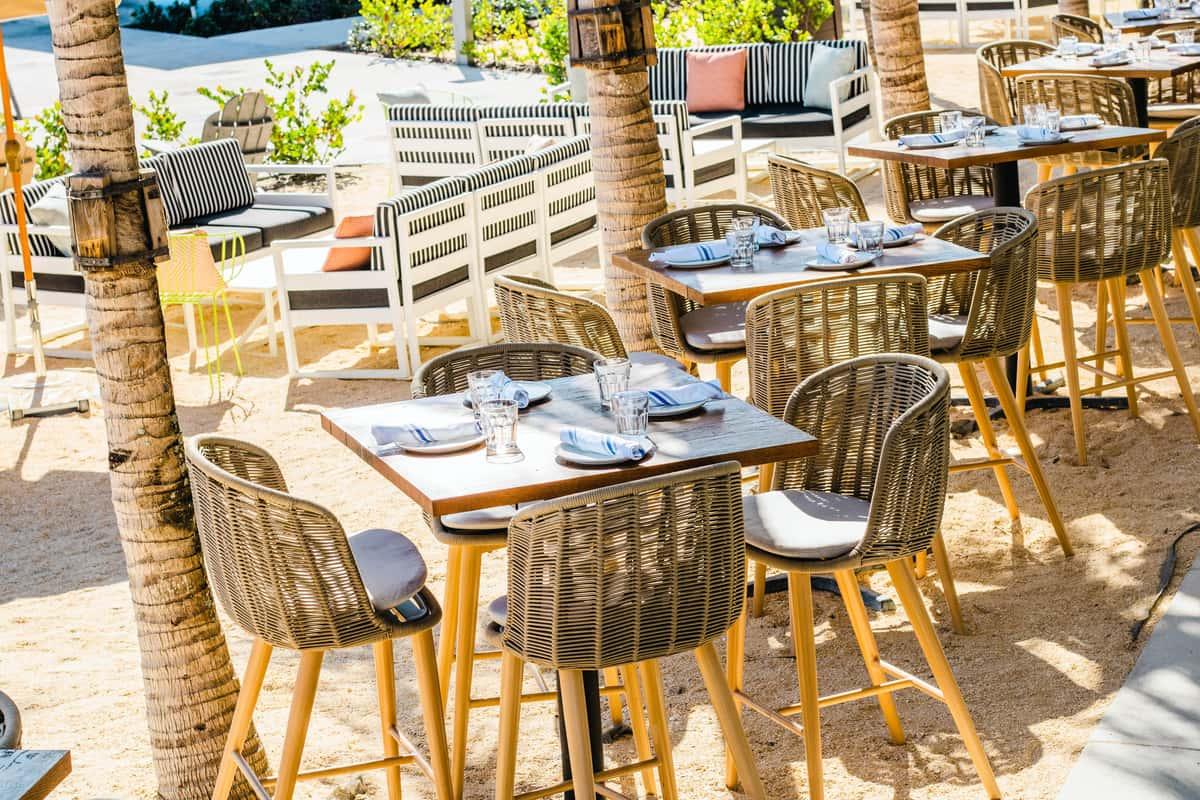
The advantages of holding meetings by the water include a memorable setting, natural light, and an environment that distinguishes your event from standard conference rooms. Waterfront venues along Biscayne Bay offer panoramic skyline views that elevate the perceived quality of any gathering. According to the Kaseya Center's official booking page, the AT&T East Plaza provides a 23,000-square-foot covered outdoor space with views of the Miami skyline and Biscayne Bay, accommodating up to 2,500 guests with stage, Wi-Fi, and LED lighting capabilities.
Open-air waterfront settings also create natural opportunities for breakout conversations during receptions and networking sessions. For planners looking to leave a lasting impression, few backdrops compete with a bay-side venue at sunset.
How Does the Atmosphere of a Waterfront Venue Impact Productivity?
The atmosphere of a waterfront venue impacts productivity by promoting mental restoration and sustained attention. Broader environmental psychology research suggests that water views increase cognitive fascination and reduce mental fatigue. A 2019 crossover study published in Frontiers in Built Environment found that perceived restorativeness scores for fascination rose significantly in a waterfront setting (mean 4.43) compared to a control environment (mean 3.57, p < 0.001, n=23).
No direct study has compared waterfront business-event venues against traditional conference centers on attendee productivity or engagement metrics. Still, the consistent pattern across environmental research points toward calmer, more focused attendees when natural water elements are present. For event planners weighing venue options, that restorative quality can translate into sharper discussions and more engaged participants throughout the day.
Understanding atmosphere sets the stage for choosing a venue that pairs character with capability.
How Does Bayshore Club Offer a Distinctive Meeting Venue Experience in Coconut Grove?
Bayshore Club offers a distinctive meeting venue experience in Coconut Grove by combining waterfront dining, 1930s aviation heritage, and flexible private event spaces. The following sections explore what makes this setting unique and summarize key takeaways for choosing the best Downtown Miami meeting location.
How Can Bayshore Club's Waterfront Dining and 1930s Aviation Theme Elevate Your Meeting?
Bayshore Club's waterfront dining and 1930s aviation theme can elevate your meeting by placing guests in a setting rooted in genuine Coconut Grove history. Bayshore Club sits on the Dinner Key site, where Pan American World Airways launched its inter-American seaplane operations on December 1, 1930, according to the National Park Service. The Streamline Moderne terminal that once served Clipper passengers now stands as Miami City Hall, anchoring the area's identity.
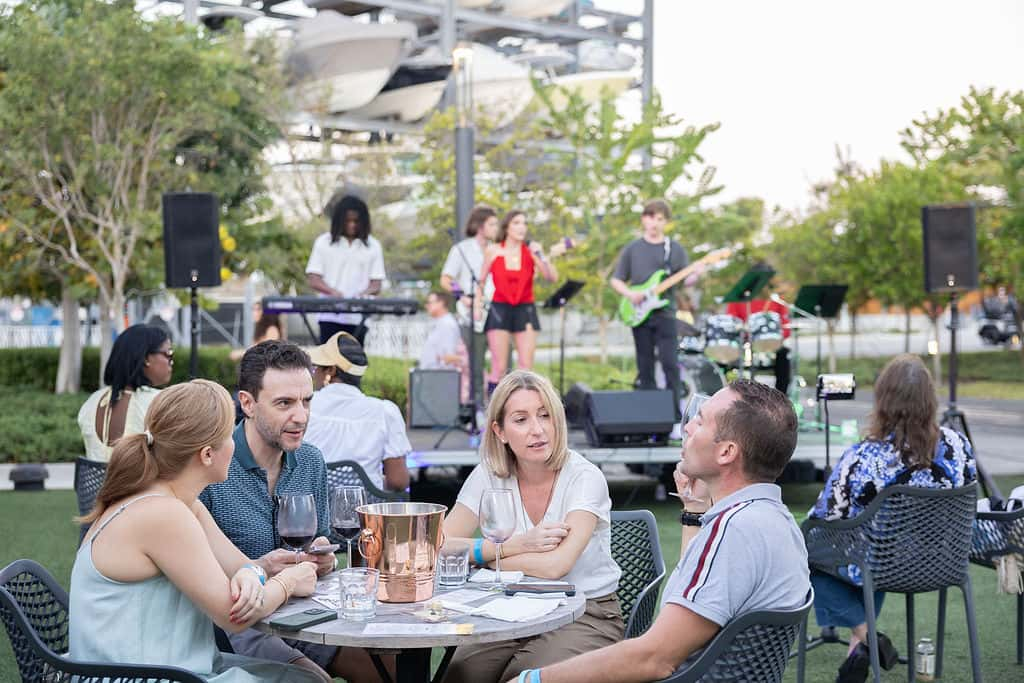
This heritage gives private gatherings a narrative backdrop that standard conference rooms cannot replicate. Bayshore Club accommodates semi-private dining for 20 seated or 50 cocktail guests, with full buyout options for up to 160 seated or 250 cocktail. Pairing a waterfront raw bar with aviation-era nostalgia creates a "vacation state-of-mind" atmosphere, ideal for client dinners, team off-sites, or networking receptions where the setting itself becomes a conversation starter.
What Are the Key Takeaways About the Best Downtown Miami Meeting Locations?
The key takeaways about the best Downtown Miami meeting locations center on three decisions: format, amenities, and atmosphere.
- Match venue scale to meeting type. Downtown Miami offers everything from hourly conference rooms (starting at $19 per hour through providers like Regus) to large-format convention halls seating thousands.
- Prioritize integrated catering and technology. Venues with on-site dining and reliable AV capabilities reduce coordination friction and keep attendees engaged.
- Consider waterfront settings for relationship-driven events. Networking receptions, client entertainment, and team gatherings benefit from distinctive environments that encourage conversation.
- Factor in accessibility. Downtown Miami's high transit score and proximity to Miami International Airport simplify logistics for both local and visiting attendees.
For planners seeking a venue that blends culinary quality, historic character, and Biscayne Bay views just minutes from Downtown, Bayshore Club provides an experience that elevates meetings beyond the conventional.