
How to Choose a Wedding Venue for Large Guest Count
How to Choose a Wedding Venue for Large Guest Count
Choosing a wedding venue for a large guest count is the process of matching your headcount to a space that delivers comfort, logistics, and atmosphere at scale. Every decision, from square footage per guest to catering staffing ratios, compounds as the invite list grows.
This guide covers venue selection criteria, location advantages, essential amenities, design strategy, budget planning, booking timelines, and insights from waterfront venues in Coconut Grove, FL.
Venue selection criteria start with the relationship between capacity and guest comfort. A space that technically holds 200 people can feel overcrowded once dining configurations, service corridors, and dance floors consume usable square footage. Floor plan layout, ADA-compliant parking, and barrier-free pathways all factor into whether every guest arrives and moves through the event with ease.
Location shapes the celebration in ways that go beyond scenery. Waterfront and destination settings provide built-in backdrops and expansive outdoor space, while proximity to hotels, airports, and ground transit reduces friction for out-of-town attendees.
Essential amenities determine whether a venue can operate smoothly at 150+ guests. Plated dinners, buffet service, and bar operations each require specific staffing ratios; built-in AV infrastructure and dedicated coordination staff prevent the gaps that become glaring at scale.
Balancing aesthetics with practicality means choosing a theme whose visual identity comes from the venue itself. Strategic zoning, varied lighting, and mixed seating formats maintain intimacy even at high headcounts.
Budget planning for large weddings in 2026 requires attention to tiered food-and-beverage minimums, service charges, AV rentals, and overlooked surcharges that can inflate final costs well beyond initial quotes. Booking 18 to 30 months in advance protects both your preferred date and your per-guest budget.
What Criteria Should You Consider When Selecting a Wedding Venue for a Large Group?
The criteria you should consider when selecting a wedding venue for a large group include venue capacity relative to guest comfort, floor plan layout for smooth event flow, and accessibility with adequate parking. Each factor directly affects the guest experience at scale.
How Do Venue Capacity and Guest Comfort Intersect When Planning for a Large Wedding?
Venue capacity and guest comfort intersect when planning for a large wedding through the relationship between square footage per person, staffing levels, and overall cost. A venue that technically holds 200 guests may feel cramped if dining configurations leave too little room for movement between tables, service corridors, and the dance floor.
According to The Knot's 2026 Real Weddings Study, the average wedding cost for over 100 guests reaches $43,300, compared to $27,200 for 51 to 100 guests. That steep jump reflects the compounding demands larger headcounts place on space, staffing, and service infrastructure. Bussers alone require a ratio of 1 per 20 to 30 guests at large events, while lead servers are needed at 1 per team of 8 to 10 servers.
Couples who prioritize guest comfort alongside raw capacity consistently avoid the most common large-wedding pitfall: a venue that fits everyone on paper but feels overcrowded on the day.
What Role Does Venue Layout Play in Accommodating a High Guest Count?
Venue layout plays a critical role in accommodating a high guest count by determining how guests move between ceremony, cocktail, dining, and entertainment zones. A well-designed floor plan separates these areas with clear sightlines and natural circulation paths, preventing bottlenecks that frustrate guests at large weddings.
Key layout considerations for high guest counts include:
- Distinct zones for the ceremony, reception, and cocktail hour that allow simultaneous setup and teardown.
- Wide corridors and multiple entry points to prevent congestion during transitions.
- Flexible indoor and outdoor configurations that adapt to weather or crowd size.
- Adequate space for AV equipment, since outdoor events require 20 to 40% higher AV costs according to Paperlust, driven by more powerful speakers and longer cable runs.
Choosing a venue with multiple connected spaces rather than one large room gives couples far more control over guest flow and atmosphere.
How Can You Ensure Accessibility and Parking for a Large Number of Attendees?
You can ensure accessibility and parking for a large number of attendees by verifying ADA-compliant infrastructure and calculating parking demand before signing a venue contract. These logistics are easy to overlook during venue tours, yet they directly impact whether every guest can arrive and navigate the event comfortably.
Essential accessibility and parking criteria include:
- Accessible parking spaces calculated per lot, ranging from 1 space for 1 to 4 total spaces up to 20 plus 1 per 100 spaces beyond 1,000, according to the U.S. Access Board.
- Level, barrier-free pathways from parking areas to the ceremony and reception spaces.
- ADA-compliant restroom facilities with adequate clearance and signage.
- Sufficient total parking capacity or a shuttle and valet plan for overflow.
For a 150-plus guest wedding, proactively confirming these details separates a seamless arrival experience from a stressful one. With venue selection criteria established, the next step is evaluating how location shapes the overall celebration.
How Does Location Influence the Choice of Wedding Venue for Large Weddings?
Location influences the choice of wedding venue for large weddings by affecting guest travel logistics, available outdoor space, scenic backdrops, and vendor accessibility. The following subsections cover waterfront and destination venue advantages, plus how to evaluate proximity to accommodations and transportation.
What Are the Advantages of Waterfront and Destination Venues for Big Celebrations?
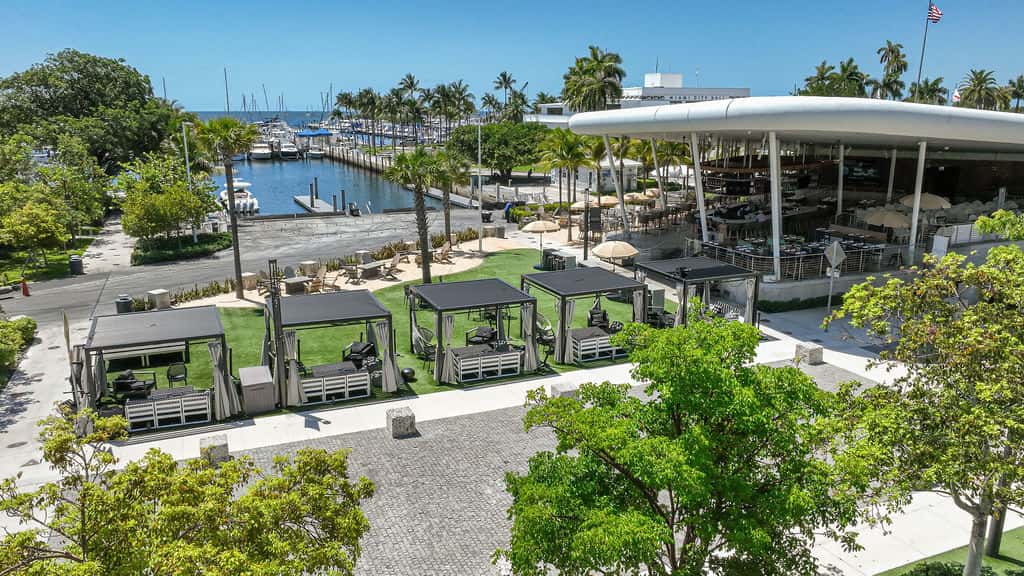
The advantages of waterfront and destination venues for big celebrations include built-in scenic backdrops, expansive outdoor space, and a memorable guest experience that requires minimal additional decor. Waterfront settings in locations like Coconut Grove, FL naturally accommodate large guest counts because open-air lawns and terraces extend usable event space beyond interior walls. Bayshore Club in Coconut Grove exemplifies this approach, offering waterfront dining and flexible indoor-outdoor configurations that create what the venue calls a "vacation state-of-mind" atmosphere—particularly valuable when hosting celebrations that benefit from both scenic backdrops and operational flexibility.
Destination and waterfront venues also create a "vacation state-of-mind" atmosphere, which encourages guests to arrive early and stay longer. However, outdoor waterfront locations do carry additional AV considerations. According to Paperlust, on-site sound technicians for weddings typically charge $50 to $100 per hour, with most wedding-day engagements running 4 to 8 hours, totaling $400 to $1,200. Factoring these costs early prevents day-of surprises at large outdoor celebrations.
How Should Proximity to Accommodations and Transportation Be Evaluated?
Proximity to accommodations and transportation should be evaluated by mapping hotel availability, airport distance, and ground transit options within a reasonable radius of the venue. For weddings exceeding 150 guests, a significant portion of attendees may travel from out of town, making nearby lodging essential.
Key factors to assess include:
- Hotels within a 10-minute drive that offer group room blocks at negotiated rates.
- Airport proximity, since venues near major hubs like Miami International Airport simplify arrival logistics for destination guests.
- Rideshare accessibility and dedicated parking capacity at the venue itself.
- Shuttle feasibility between hotel blocks and the celebration site.
A venue in an established neighborhood like Coconut Grove benefits from walkable restaurants, boutique hotels, and reliable transit connections, all of which reduce friction for a large guest list. Prioritizing these logistics early helps couples avoid last-minute coordination headaches once the guest count climbs.
With location factors established, the next step is evaluating on-site amenities and services.
What Amenities and Services Are Essential for Large Wedding Venues?
The essential amenities and services for large wedding venues include scalable catering and bar operations, dedicated coordination staff, and professional audio-visual infrastructure. Each of these elements determines whether a venue can handle 150+ guests smoothly.
Which Catering and Bar Service Options Work Best for Extensive Guest Lists?
The catering and bar service options that work best for extensive guest lists are plated dinners and buffet-style service, each with distinct staffing requirements. Plated service demands higher staff density for synchronized delivery, while buffets allow leaner teams with broader coverage.
According to Serve & Savour Catering, plated dinner service requires 1 server per 6 guests and 1 chef per 15 guests, with 4-5 servers delivering plates simultaneously to maintain food temperature. Buffet service operates at 1 staff member per 15 guests and 1 chef per 50 guests, though larger functions need a captain for quality control.
Bar staffing follows a similar scaling logic:
- Mixed drink or cocktail-heavy events need 1 bartender per 50 guests.
- Beer and wine only service requires 1 bartender per 75 guests.
When evaluating venues for 200+ guests, confirming that the in-house catering team can meet these ratios is far more important than the menu itself.
What Support Staff and Coordination Services Should You Look for in a Venue?
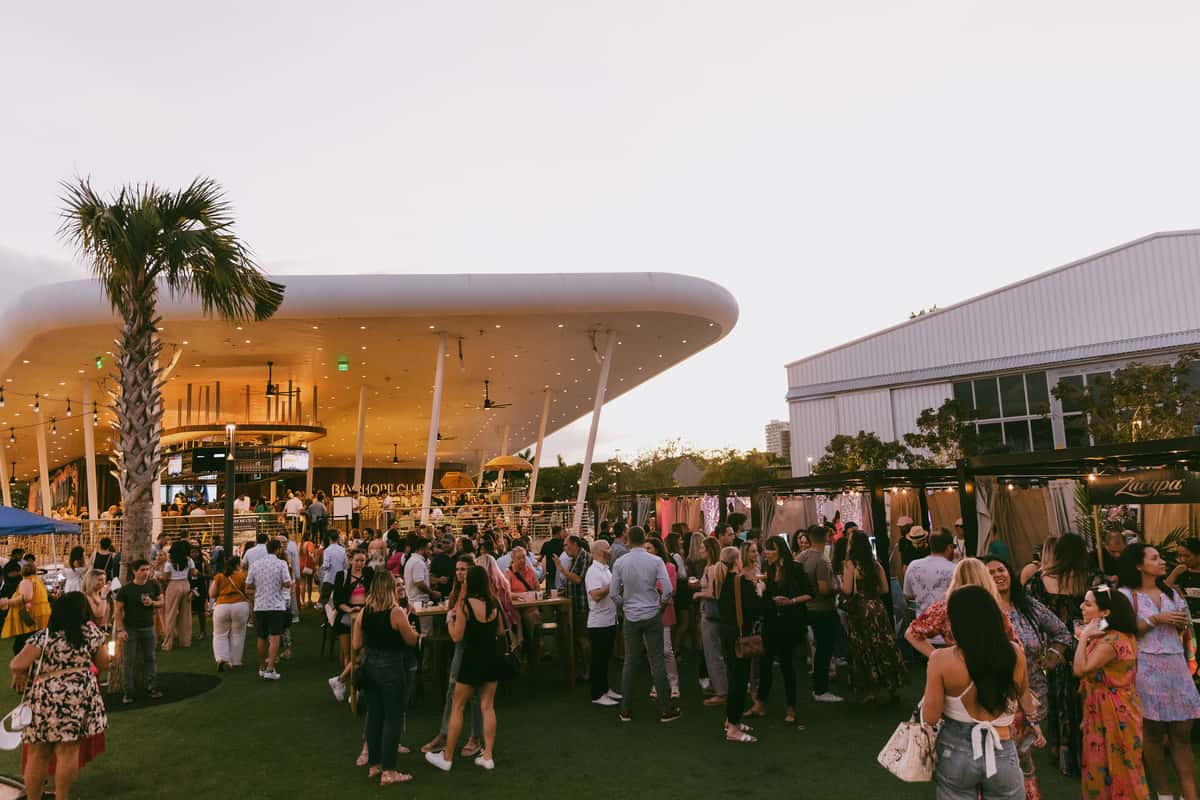
The support staff and coordination services you should look for in a venue include a dedicated event coordinator, on-site setup and breakdown crews, bussing teams, and a lead captain overseeing service flow. These roles prevent bottlenecks that become exponentially worse as guest counts rise.
A strong venue assigns one point of contact who manages the timeline from ceremony through send-off. Behind the scenes, bussers and captains keep the reception running without visible gaps between courses or service transitions. Venues that bundle coordination into their packages simplify vendor communication and reduce the number of independent contractors couples must manage. For large weddings, this operational backbone matters as much as the space itself.
How Important Are Audio-Visual, Decor, and Entertainment Accommodations for Large Events?
Audio-visual, decor, and entertainment accommodations are critically important for large events because sound coverage, lighting design, and visual elements must scale proportionally with venue size and guest count. Poor audio remains the most common complaint at large gatherings, according to AVIXA, the Audiovisual and Integrated Experience Association.
Large reception halls benefit from line array speakers for long-throw applications and distributed speaker systems for uniform coverage across seating zones. Venues with built-in AV infrastructure, dedicated bar areas, and flexible indoor/outdoor configurations save couples from sourcing everything externally. Decor and entertainment accommodations, such as uplighting rigging points and stage-ready power circuits, signal that a space was designed for celebrations at scale.
With amenities and services confirmed, balancing the visual atmosphere against logistical realities becomes the next priority.
How Can You Balance Aesthetics and Practicality When Choosing a Venue for a Big Celebration?
You can balance aesthetics and practicality by selecting a venue whose architectural style naturally complements your theme while offering the infrastructure to serve 150+ guests comfortably. The following sections cover which design themes scale well and how to maintain intimacy at higher headcounts.
What Styles and Themes Work Well for Large-Scale Weddings?
The styles and themes that work well for large-scale weddings are those with naturally expansive visual lines, such as waterfront tropical, classic ballroom, garden estate, rustic farmhouse, and modern industrial. These themes succeed because their design elements fill large spaces without requiring excessive custom decor.
Waterfront venues are particularly effective for big celebrations. Open sightlines across the water provide a built-in backdrop that replaces the need for elaborate stage design or heavy floral installations. Tropical and nautical palettes, with soft blues, greens, and natural textures, scale effortlessly across wide dining areas.
For couples drawn to bold aesthetics, industrial loft spaces and grand ballroom settings offer high ceilings and open floor plans that absorb large guest counts without feeling cramped. The key is choosing a theme whose core visual identity comes from the venue itself rather than from added decor that multiplies in cost with every additional table.
How Can You Create an Intimate Atmosphere Despite a Higher Guest Count?
You can create an intimate atmosphere despite a higher guest count by breaking the room into smaller visual zones. Strategic seating arrangements, varied lighting levels, and distinct lounge areas transform one large celebration into a series of connected, personal moments.
Lowered pendant lighting or string lights over individual table clusters draw the eye inward, making each grouping feel like its own gathering. Mixed seating formats, combining long family-style tables near the couple with smaller rounds farther out, create a layered depth that prevents the "banquet hall" effect.
Dedicated cocktail corners, dessert stations, and outdoor terraces give guests reasons to move through different spaces. When people circulate between zones rather than sitting in one cavernous room all evening, conversations stay personal. The venue's own architecture helps too; rooms with alcoves, wraparound terraces, or indoor-outdoor flow naturally segment the crowd without physical barriers.
With design choices settled, the next step is understanding how budget factors shape large venue decisions.
What Budget Considerations Are Crucial for Large Wedding Venues in 2026?
The budget considerations crucial for large wedding venues in 2026 include escalating per-guest costs, venue rental minimums that scale with headcount, and hidden fees that inflate final totals well beyond initial quotes. Understanding rental fee structures and overlooked expenses helps couples plan realistically.
How Do Venue Rental Fees and Minimums Scale with High Guest Counts?
Venue rental fees and minimums scale with high guest counts through tiered food-and-beverage minimums, higher per-person catering rates, and increased service charges tied directly to headcount. Most large-capacity venues use minimums rather than flat rental fees, meaning the more guests you invite, the higher the spending threshold you must meet.
According to The Knot's 2026 Real Weddings Study, the average wedding cost for over 100 guests reaches $43,300, compared to just $17,100 for weddings with 50 or fewer guests. Catering alone averages $80 per person nationally, so a 200-guest wedding starts at roughly $16,000 in food costs before beverage packages, service charges, or tax. Peak-season Saturday dates command the highest minimums at most venues, while off-season weekdays offer meaningful savings. Couples planning large celebrations should request itemized minimum breakdowns early in the venue search to avoid budget surprises.
What Hidden Costs Should Couples Watch Out for With Large Events?
The hidden costs couples should watch out for with large events include service charges, sales tax on food and beverage, AV rentals, ADA compliance additions, overtime fees, and vendor meal requirements. These line items rarely appear in initial venue quotes yet can add 25-40% to the base price.
According to Paperlust, wedding sound system rentals cost $400 to $3,500 in 2026, with large or outdoor venues requiring $1,500 to $3,500 for multi-zone professional production. Key hidden costs to budget for include:
- Service charges and gratuities, often 18-22% applied to all food and beverage totals.
- Sales tax added on top of service charges, compounding the final bill.
- ADA-accessible restroom units, which must comprise at least 5% of portable toilet rentals at event sites.
- Overtime fees if celebrations run past contracted end times.
- Vendor meals for photographers, DJs, and coordinators, typically charged at a reduced per-head rate.
- Valet, coat check, or security staff required for events exceeding certain guest thresholds.
Booking 12-18 months ahead for peak-season dates also means deposits are locked in earlier, reducing financial flexibility. Couples who itemize every potential surcharge before signing a contract protect themselves from costly surprises on the final invoice.
With budget parameters established, understanding venue availability and booking timelines ensures couples secure the right space at the right price.
How Should You Navigate Availability and Booking Timelines for Large Venues?
You should navigate availability and booking timelines for large venues by starting your search 18 to 30 months before your wedding date. The sections below cover ideal reservation windows and how flexible large venues tend to be with date changes or weather contingencies.
When Should You Reserve a Venue for a Wedding with an Extensive Guest List?
You should reserve a venue for a wedding with an extensive guest list 18 to 30 months in advance. According to Cat Alkire Photography, large weddings with 150+ guests require booking 18 to 30 months ahead, with popular venues often reserving dates 18 to 24 months out to ensure availability.
This extended timeline matters because couples coordinate an average of 13 wedding vendors, and the venue sets the anchor date for every other booking. Since 89% of couples book a venue as their first vendor commitment, delaying this step creates a cascading scheduling problem for photographers, caterers, and entertainment.
For couples planning celebrations well above the national average of 117 guests, starting early is not optional; it is the single most important planning decision that protects both your preferred date and your per-guest budget.
How Flexible Are Large Venues Regarding Date Changes or Weather Contingencies?
Large venues are generally less flexible regarding date changes than smaller properties, primarily because their limited inventory of high-capacity dates books far in advance. Most large venues enforce strict cancellation and rescheduling clauses within their contracts, often requiring written notice 60 to 90 days before the event for any date modification.
Weather contingencies, however, are a different matter. Venues with both indoor and outdoor configurations, such as properties offering covered terraces or enclosed reception halls alongside lawn spaces, can typically shift the celebration indoors without changing the date itself. This built-in flexibility is one reason waterfront and hybrid venues in South Florida remain popular for large weddings.
Before signing any contract, confirm whether the venue includes a rain plan at no additional cost or charges a room-flip fee. Couples who overlook this detail often face unexpected expenses when weather forces a last-minute layout change. Understanding these policies early gives you leverage during contract negotiations.
How Does the Experience at Bayshore Club in Coconut Grove Enhance Large Weddings?
The experience at Bayshore Club in Coconut Grove enhances large weddings by combining waterfront event spaces, curated culinary offerings, and a historic setting rooted in the golden age of aviation. Below, explore how the dining experience elevates celebrations and the essential takeaways for choosing a large wedding venue.
Can Bayshore Club's Waterfront Dining, Brunch, and Raw Bar Offerings Elevate a Big Wedding Celebration?
Yes, Bayshore Club's waterfront dining, brunch, and raw bar offerings can elevate a big wedding celebration by providing a culinary experience that matches the scale and significance of the event. Bayshore Club offers waterfront event spaces designed to accommodate both intimate gatherings and large celebrations. This flexibility allows couples to host ceremonies and receptions in a single waterfront location.
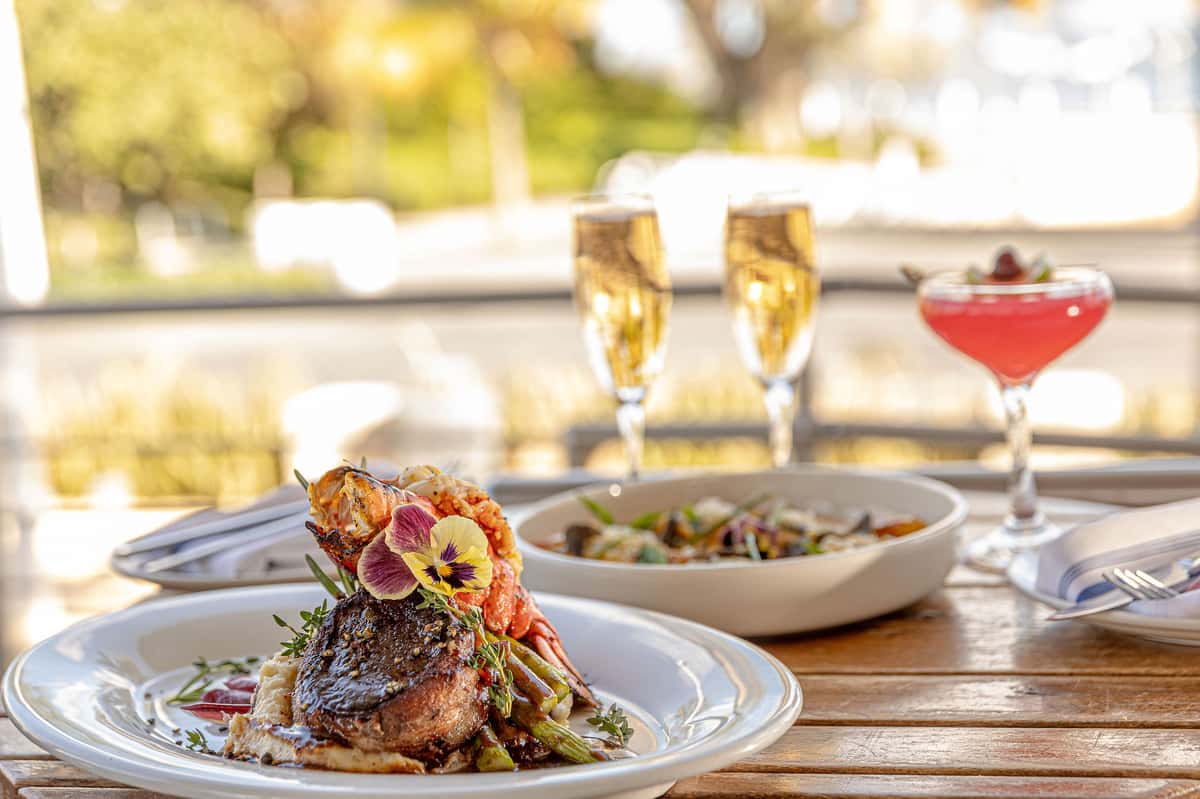
The raw bar, a signature element of the menu, adds a layer of sophistication that seated dinner service alone cannot achieve. Fresh seafood stations give guests an interactive, memorable dining moment, while brunch options open possibilities for daytime celebrations. For couples seeking a venue where culinary quality matches the significance of the occasion, properties like Bayshore Club—which emphasizes fresh ingredients and raw bar offerings rooted in its waterfront Coconut Grove location—demonstrate how integrated dining experiences can elevate large wedding celebrations beyond standard catering. Each space offers waterfront views and flexible indoor/outdoor configurations, creating a "vacation state of mind" atmosphere that turns a wedding into an immersive experience. For couples planning celebrations with 150 or more guests, having dedicated bar areas and AV capabilities already built into the venue simplifies vendor coordination considerably.
What Are the Key Takeaways About Choosing the Best Wedding Venue for a Large Guest Count?
The key takeaways about choosing the best wedding venue for a large guest count center on five priorities:
- Verify true capacity. Confirm seated dining capacity separately from cocktail reception capacity, since the difference can be substantial.
- Prioritize flexible layouts. Venues with multiple connected spaces allow couples to host the ceremony, cocktail hour, and reception without transporting guests offsite.
- Evaluate catering infrastructure. In-house kitchen capabilities and staffing ratios directly affect food quality at scale.
- Book early. Large-capacity venues in desirable locations fill quickly, often 18 to 24 months before peak-season dates.
- Account for full per-guest costs. According to Carats and Cake, weddings of 101 to 150 guests represent 31 to 34% of all U.S. weddings, making this the most common size range, yet per-guest expenses for food, beverage, and service add up faster than most couples anticipate.
Choosing a venue that addresses capacity, cuisine, and guest experience under one roof, like Bayshore Club in Coconut Grove, reduces logistical complexity and lets couples focus on the celebration itself.