Seafood vs. Meat: Nutrition, Health, and Flavor for Coconut Grove Diners
Seafood vs. Meat: Nutrition, Health, and Flavor for Coconut Grove Diners
Seafood vs. Meat: Nutrition, Health, and Flavor for Coconut Grove Diners
At Bayshore Club we celebrate this tradition by offering fresh, locally sourced seafood that not only delights the palate but also supports health and sustainability.
This article compares seafood and meat in terms of nutrition, health outcomes, environmental impact, and dining experience, tailored for Coconut Grove diners seeking informed choices. Whether you're a health-conscious professional near Brickell City Centre or a visitor enjoying Biscayne Bay, we'll guide you through why seafood, especially at Bayshore Club, is a smart pick.
Quick Nutritional Snapshot – Seafood vs Meat
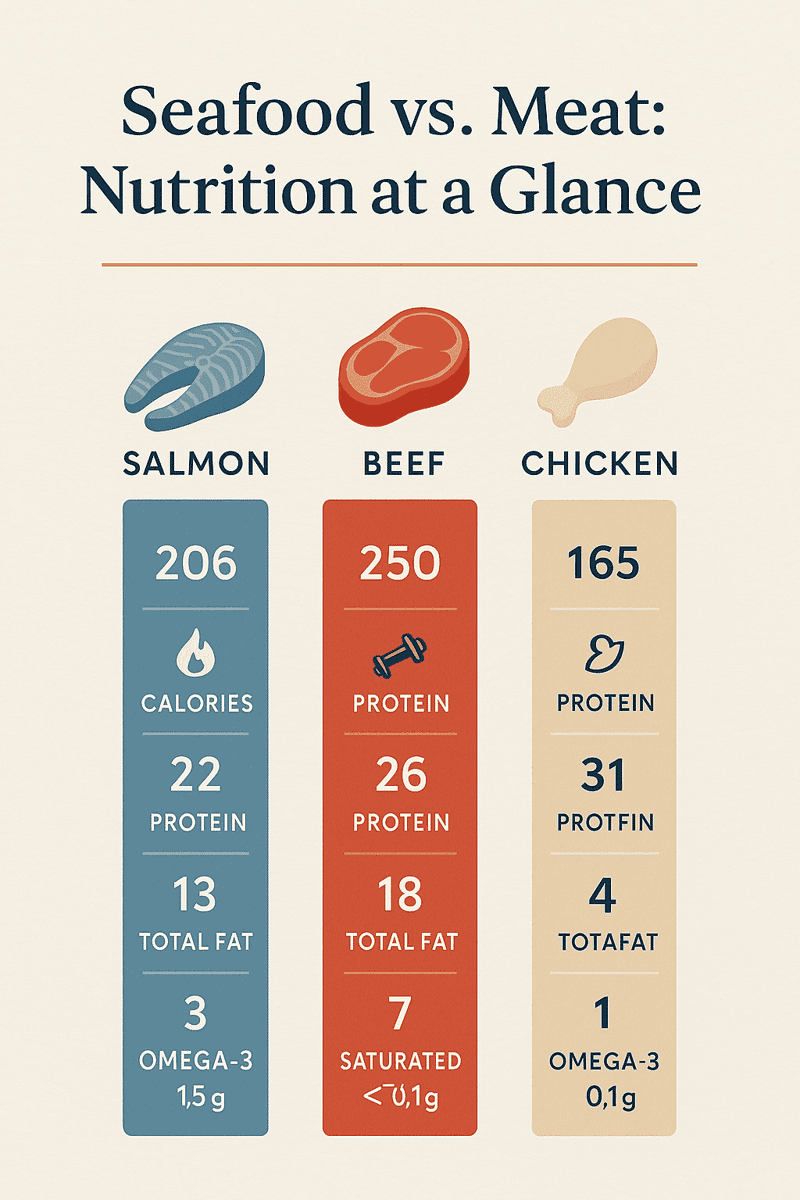
Seafood and meat both provide essential nutrients, but their profiles differ significantly. Seafood, such as salmon, is renowned for its omega-3 fatty acids, which support heart and brain health. According to the USDA FoodData Central, a 100g serving of cooked salmon contains approximately 206 calories, 22.3g of protein, and 12.4g of fat, including 2.32g of omega‑3s.
In contrast, red meat, like beef tenderloin, offers 218 calories, 27.58g of protein, and 11.12g of fat, with 4.12g of saturated fat per 100g.
Poultry, such as chicken breast, is leaner, providing 165 calories, 31g of protein, and 3.57g of fat per 100g. While beef has slightly more protein, seafood's lower saturated fat and omega‑3 content make it a heart‑healthy choice.
Nutrient (per 100g)
Cooked Salmon
Cooked Beef Tenderloin
Cooked Chicken Breast
Calories
206 kcal
218 kcal
165 kcal
Protein
22.3g
27.58g
31g
Total Fat
12.4g
11.12g
3.57g
Saturated Fat
2.41g
4.12g
1g
Omega‑3s
2.32g
Minimal
Minimal
Vitamins & Minerals Cheat‑Sheet
Seafood excels in vitamin D, iodine, and selenium, while red meat is richer in iron and zinc. For example, salmon provides 13.12 mcg of vitamin D (65% DV) and 41.4 mcg of selenium (75% DV) per 100 g. Beef offers 2.99 mg of iron (17% men, 37% women) and 4.94 mg of zinc (45% DV) per 100 g. Chicken provides moderate amounts of selenium and B vitamins, making it a versatile option.
Component
Seafood (e.g., Salmon)
Red Meat (e.g., Beef)
Essential Amino Acids
High in lysine and leucine
High in histidine and methionine
Creatine
4.5 g/kg (salmon)
5 g/kg
Carnitine
Low
High
Fats That Matter: Omega‑3 vs Saturated Fat
EPA & DHA Benefits for Heart and Brain
Omega‑3 fatty acids, particularly EPA and DHA in seafood, reduce triglycerides, lower blood pressure, and decrease arrhythmia risk, according to the American Heart Association.
Omega‑3 fatty acids, particularly EPA and DHA in seafood, reduce triglycerides, lower blood pressure, and decrease arrhythmia risk, according to the American Heart Association.
A 100 g serving of salmon provides 2.32 g of omega‑3s, significantly more than the minimal amounts in beef or chicken.
Managing LDL, HDL, and Triglycerides
High saturated fat intake from red meat can raise LDL ("bad") cholesterol, increasing heart disease risk. Replacing red meat with seafood, as recommended by health experts, can improve cholesterol profiles and support cardiovascular health.
High saturated fat intake from red meat can raise LDL ("bad") cholesterol, increasing heart disease risk. Replacing red meat with seafood, as recommended by health experts, can improve cholesterol profiles and support cardiovascular health.
Micronutrient Spotlight
Vitamin D, Iodine, and Selenium from the Sea
Seafood is a powerhouse for micronutrients. Salmon provides 13.12 mcg of vitamin D per 100g, supporting bone and immune health, and 41.4 mcg of selenium, an antioxidant. Cod offers 63–99 mcg of iodine per 85g, crucial for thyroid function.
Seafood is a powerhouse for micronutrients. Salmon provides 13.12 mcg of vitamin D per 100g, supporting bone and immune health, and 41.4 mcg of selenium, an antioxidant. Cod offers 63–99 mcg of iodine per 85g, crucial for thyroid function.
Iron and Zinc Density in Meats
Beef provides 2.99 mg of iron and 4.94 mg of zinc per 100 g, vital for oxygen transport and immunity. Chicken offers moderate iron and zinc, making it a balanced option.
Beef provides 2.99 mg of iron and 4.94 mg of zinc per 100 g, vital for oxygen transport and immunity. Chicken offers moderate iron and zinc, making it a balanced option.
Micronutrient
Seafood (per 100 g)
Red Meat (per 100 g)
Vitamin D
13.12 mcg (salmon)
Minimal
Iodine
74–116 mcg (cod)
Minimal
Selenium
41.4 mcg (salmon)
25 mcg (beef)
Iron
0.34 mg (salmon)
2.99 mg
Zinc
0.43 mg (salmon)
4.94 mg
Health Outcomes and Dietary Patterns
Cardiovascular Risk and Inflammation
Research, including a 2021 meta-analysis, suggests fish consumption reduces coronary heart disease incidence and mortality due to omega‑3s.
Research, including a 2021 meta-analysis, suggests fish consumption reduces coronary heart disease incidence and mortality due to omega‑3s.
Conversely, high red meat intake is associated with increased cardiovascular risk, though some studies question the strength of this link.
Weight Management & Satiety Index
Seafood's high protein and low‑calorie density support weight loss by enhancing satiety and boosting metabolism, according to a 2021 review.
Seafood's high protein and low‑calorie density support weight loss by enhancing satiety and boosting metabolism, according to a 2021 review.
Environmental and Ethical Considerations
Sustainable Seafood Certifications Explained
Choosing seafood with certifications like the Marine Stewardship Council (MSC) ensures sustainable sourcing, minimizing environmental impact.
Beef emits 60 kg CO₂‑eq per kg, far higher than pork (7 kg), poultry (6 kg), or wild‑caught fish (5–10 kg). Opting for seafood reduces your environmental footprint, aligning with Miami's eco-conscious dining scene.
Choosing seafood with certifications like the Marine Stewardship Council (MSC) ensures sustainable sourcing, minimizing environmental impact.
Beef emits 60 kg CO₂‑eq per kg, far higher than pork (7 kg), poultry (6 kg), or wild‑caught fish (5–10 kg). Opting for seafood reduces your environmental footprint, aligning with Miami's eco-conscious dining scene.
Flavor, Cooking Methods, and Dining Experience
Grilling, Steaming, Smoking – Nutrient Trade‑Offs
Steaming and grilling seafood preserve nutrients like omega‑3s and vitamin D, unlike frying, which adds calories and reduces healthy fats.
Steaming and grilling seafood preserve nutrients like omega‑3s and vitamin D, unlike frying, which adds calories and reduces healthy fats.
Umami Depth, Texture, and Plate Appeal
Seafood offers a delicate, umami‑rich flavor, enhanced by Bayshore Club's Key West‑inspired preparations, such as oak‑smoked fish dip, providing a memorable dining experience.
Seafood offers a delicate, umami‑rich flavor, enhanced by Bayshore Club's Key West‑inspired preparations, such as oak‑smoked fish dip, providing a memorable dining experience.
Miami's Seafood Culture and Seasonal Catch
Local Fisheries, Reefs, and Regulations
Miami's Gulf Stream waters yield seasonal catches like snapper (year‑round), mahi‑mahi (summer), and tarpon (spring), regulated by the Florida Fish and Wildlife Conservation Commission to ensure sustainability.
Miami's Gulf Stream waters yield seasonal catches like snapper (year‑round), mahi‑mahi (summer), and tarpon (spring), regulated by the Florida Fish and Wildlife Conservation Commission to ensure sustainability.
FAQs – Seafood vs Meat in Your Diet
Is seafood always healthier than meat?
Often, yes—fish is lower in saturated fat and higher in omega‑3s, but lean poultry can be similarly heart‑friendly.
Often, yes—fish is lower in saturated fat and higher in omega‑3s, but lean poultry can be similarly heart‑friendly.
How much fish should I eat weekly?
The USDA and American Heart Association suggest two 4‑oz servings, emphasizing low‑mercury species like salmon.
The USDA and American Heart Association suggest two 4‑oz servings, emphasizing low‑mercury species like salmon.
Does red meat increase heart‑disease risk?
Frequent intake of fatty red meat may raise LDL cholesterol and inflammation; moderation is advised.
Frequent intake of fatty red meat may raise LDL cholesterol and inflammation; moderation is advised.
Conclusion & Local Call to Action
Seafood offers a compelling blend of nutrition, flavor, and sustainability, making it a top choice for Coconut Grove diners. At Bayshore Club Miami, we bring Miami's freshest catch to your plate, sourced responsibly to support both your health and the environment. Reserve a table today at Bayshore Club Miami to enjoy dishes like our whole roasted snapper, crafted to delight and nourish. Call (305) 209-1200 or book online to experience Miami's seafood culture at its finest.