
Types of Event Venues Miami Waterfront: Guide
Types of Event Venues Miami Waterfront: Guide
Miami waterfront event venues are properties positioned along Biscayne Bay or the Atlantic Ocean that offer panoramic views, open-air terraces, and flexible indoor-outdoor configurations for gatherings of all sizes. These coastal settings create multisensory environments where the backdrop itself reduces décor costs and elevates guest experience.
This guide covers venue features and accessibility, the main waterfront venue categories, event type compatibility, selection criteria and regulations, and what Bayshore Club brings to the Coconut Grove waterfront.
Location along the bay or ocean serves as the primary differentiator between a standard indoor space and a memorable coastal setting. Top properties layer in climate control, adaptable floor plans, audiovisual equipment, and in-house catering, while walkable neighborhoods like Coconut Grove reduce logistical friction for local and traveling guests alike.
Miami's waterfront venue categories span five distinct formats: restaurants and bars with built-in culinary programs, hotels and resorts that bundle lodging with event spaces, dedicated ballrooms offering blank-canvas flexibility, yachts providing exclusive mobile experiences, and parks suited to large-scale open-air gatherings.
Each category aligns differently with weddings, corporate functions, social gatherings, and private parties. Waterfront restaurants simplify coordination through turnkey service, while hotel properties scale from intimate micro events to multi-day celebrations with on-site accommodations.
Practical planning factors shape every booking decision. Permit timelines, hurricane season scheduling, noise ordinances, and insurance requirements all affect outdoor waterfront events. Pricing ranges widely; hourly corporate venue rates, per-head catering costs, and seasonal demand all influence the final budget. Venues with indoor-outdoor flexibility provide the most reliable year-round option across Miami's shifting weather patterns.
What Unique Features Define Waterfront Event Venues in Miami?
Waterfront event venues in Miami are defined by their coastal positioning, signature amenities, and accessibility advantages. The sections below cover how location and views shape these venues, what amenities top properties offer, and how accessibility factors into venue selection.
How Do Location and Views Impact Miami Waterfront Event Venues?
Location and views impact Miami waterfront event venues by serving as the primary differentiator between a standard indoor space and a memorable coastal setting. Venues positioned along Biscayne Bay or the Atlantic Ocean offer panoramic sightlines, open-air terraces, beachfront lawns, and flexible indoor/outdoor configurations that accommodate various event scales, according to The Shelborne.
This geographic positioning creates a natural backdrop that reduces décor costs while elevating the guest experience. Bayfront Park, a 32-acre waterfront park in Downtown Miami, demonstrates how open green spaces, public art, and iconic bay views transform an outdoor venue into a multisensory environment. For planners evaluating Miami waterfront properties, the view itself often becomes the most cost-effective design element in the entire event.
What Amenities Should You Expect at Top Miami Waterfront Venues?
The amenities you should expect at top Miami waterfront venues include climate control, adaptable floor plans, audiovisual equipment, and in-house catering or vendor flexibility. According to Peerspace, these are the key amenities to prioritize when evaluating event venues in Miami.
Beyond baseline amenities, leading waterfront properties layer in features specific to coastal settings:
- Indoor/outdoor configurations that transition seamlessly between covered dining rooms and open terraces
- On-site food and beverage programs, from raw bars to Latin-inspired cuisine
- Dedicated event coordination staff familiar with waterfront permitting requirements
- Backup indoor space for weather contingencies during Miami's rainy season
Venues lacking climate control or flexible layouts often struggle to deliver consistent guest comfort, making these amenities non-negotiable rather than optional upgrades.
How Does Accessibility Affect Waterfront Venue Selection in Miami?
Accessibility affects waterfront venue selection in Miami by determining how easily guests can arrive, park, and navigate the property. A venue in a walkable neighborhood like Coconut Grove reduces logistical friction for both local and out-of-town guests, while proximity to Miami International Airport matters for attendees flying in.
Practical accessibility factors include:
- Parking availability and cost; evening rates at Coconut Grove garages typically run $10 to $15 after 6 PM
- ADA-compliant pathways connecting parking areas to all event spaces
- Proximity to public transit, rideshare drop-off zones, and hotel accommodations
Wheelchair seating locations must be on an accessible route that connects to all public areas, as required by U.S. Department of Justice guidelines. Overlooking accessibility during the selection process creates last-minute complications that are far more expensive to solve than to prevent.
Beyond logistics, the right amenities and access points set the stage for choosing among Miami's main categories of waterfront event venues.
What Are the Main Categories of Miami Waterfront Event Venues?
The main categories of Miami waterfront event venues are restaurants and bars, hotels and resorts, dedicated event spaces and ballrooms, yachts and boats, and parks and open-air spaces. Each category offers distinct advantages depending on event size, style, and budget.
What Makes Restaurants and Bars Popular Choices for Waterfront Events?
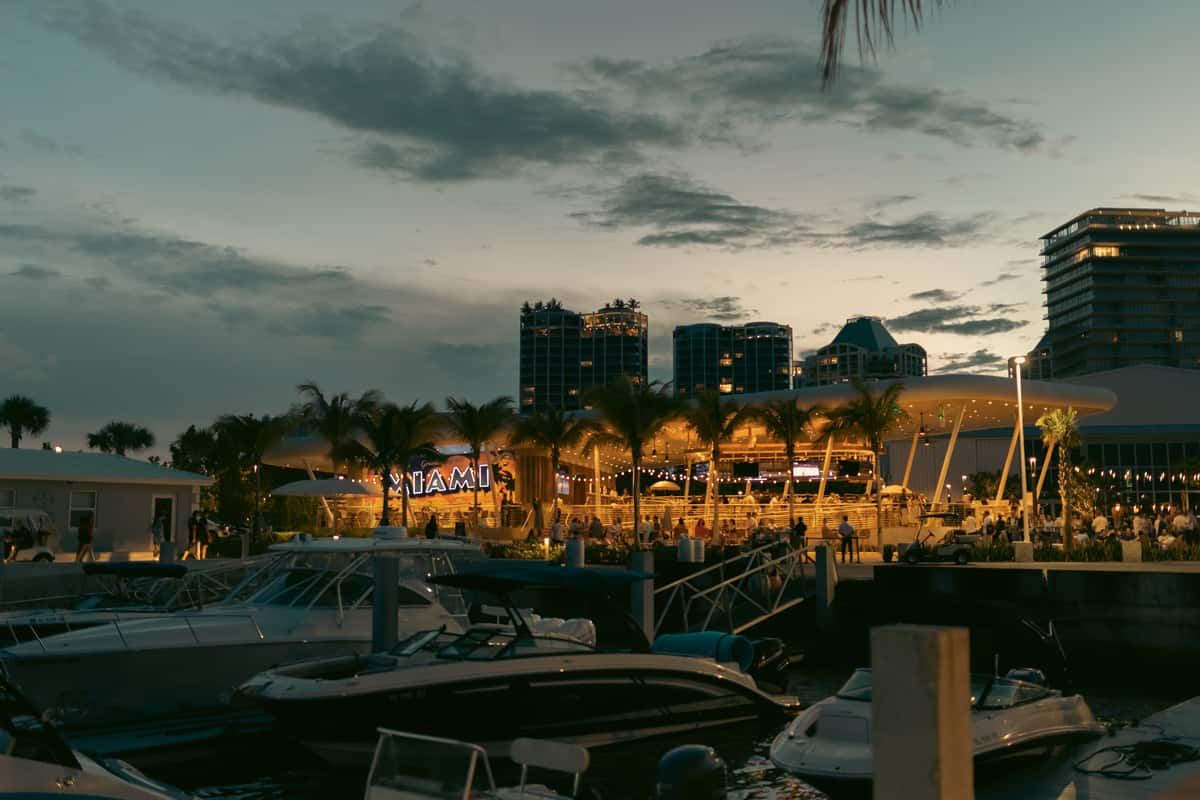
Restaurants and bars are popular choices for waterfront events because they combine built-in catering, established atmosphere, and bay views into a single booking. Planners avoid coordinating separate vendors for food, drinks, and decor since the venue handles these elements in-house. Waterfront restaurants along Biscayne Bay typically offer flexible indoor-outdoor configurations that adapt to both intimate dinners and larger celebrations. Amara at Paraiso, for example, provides a 10,000-square-foot indoor-outdoor space accommodating up to 300 guests with Latin-inspired cuisine. In Coconut Grove, Bayshore Club pairs its waterfront restaurant setting with seafood-focused dining and a raw bar, creating an atmosphere inspired by the golden age of aviation at historic Dinner Key Marina. For planners who want simplicity without sacrificing a scenic backdrop, restaurant venues remain the most turnkey option on the Miami waterfront.

Why Are Hotels and Resorts Often Used for Waterfront Events in Miami?
Hotels and resorts are often used for waterfront events in Miami because they bundle lodging, event spaces, and on-site services into one location. Out-of-town guests stay steps from the celebration, eliminating transportation logistics. Properties like The Ritz-Carlton Key Biscayne offer multiple configurations, from ballroom terraces to grand lawns with ocean views. According to ITA Group, cost considerations and intentional community building are driving more regional "micro events" focused on 20 to 100 attendees with curated networking. Hotel venues are well suited for this shift, since smaller groups can use intimate meeting rooms while still accessing the property's full amenities. That scalability makes resorts a reliable choice across event sizes.
Are There Dedicated Event Spaces or Ballrooms on the Miami Waterfront?
Yes, there are dedicated event spaces and ballrooms on the Miami waterfront. These purpose-built venues focus exclusively on hosting events rather than operating as restaurants or hotels. Briza On The Bay offers 5,000 square feet of adaptable space along Biscayne Bay for corporate gatherings, weddings, and private celebrations. Larger open-air options also exist nearby; Maurice A. Ferré Park is a 30-acre waterfront park connecting green spaces, public art, and cultural institutions along Biscayne Bay. Dedicated spaces typically require more advance planning for permits, catering, and rentals, but they provide a blank canvas that fully customizable themes demand.
How Do Yachts and Boats Serve as Event Venues in Miami?
Yachts and boats serve as event venues in Miami by offering a mobile waterfront experience that no land-based venue can replicate. Guests cruise Biscayne Bay or the Intracoastal Waterway while the city skyline shifts around them. Seafair Mega Yacht, for instance, features over 12,000 square feet of glass-enclosed event, dining, and entertainment space. Yacht venues work particularly well for milestone celebrations, product launches, and executive retreats where exclusivity matters. Capacity typically ranges from 20 guests on a chartered sailing vessel to several hundred on a mega yacht. The trade-off is limited vendor flexibility, since onboard catering and AV must meet maritime requirements.
What Role Do Parks and Open-Air Spaces Play as Waterfront Venues?
Parks and open-air spaces play the role of large-scale, budget-flexible waterfront venues for festivals, ceremonies, and community gatherings. Bayfront Park is a 32-acre waterfront park in Downtown Miami featuring public art, open green spaces, and the FPL Solar Amphitheater. According to Opulence Entertainment Group, Miami-Dade Parks requires permit applications at least 30 days in advance for small gatherings and 60 to 90 days for events with amplified sound, alcohol service, or commercial vendors. While parks offer unmatched capacity and scenic freedom, planners must supply their own infrastructure, from tenting and restrooms to catering and power. Understanding each venue category's strengths helps narrow the field before evaluating specific logistics and costs.
What Types of Events Are Best Suited for Miami Waterfront Venues?
Miami waterfront venues best suit weddings, corporate events, social gatherings, and private parties of all sizes. The following sections break down which venue formats work best for each event type.
Which Waterfront Venues Work Best for Weddings and Receptions?
Waterfront venues that work best for weddings and receptions include waterfront restaurants, luxury hotels, and dedicated event spaces with indoor-outdoor flexibility. According to The Knot 2026 Real Weddings Study, the overall average wedding cost is $34,200, with an average guest count of 117. Venues offering scenic bay backdrops naturally reduce décor costs while creating memorable ceremony settings. Waterfront restaurants with private dining areas suit intimate receptions, while hotel ballrooms with adjacent terraces handle larger celebrations that need overnight accommodations. Peak wedding season in Miami runs November through April, so venues with covered indoor options remain essential for couples planning outside that window. Choosing a venue with in-house catering simplifies coordination and often lowers per-head costs.
How Do Miami Waterfront Venues Accommodate Corporate Events?
Miami waterfront venues accommodate corporate events through flexible floor plans, built-in audiovisual capabilities, and catering packages scaled for professional gatherings. Waterfront locations provide a competitive edge through multisensory environments and scenic backdrops that boost attendee engagement and recall. According to Peerspace, corporate event venues in Miami average $209 per hour, with smaller spaces averaging $188 per hour and larger venues running approximately $446 per hour. A venue in a walkable neighborhood like Coconut Grove reduces logistical friction for both local guests and attendees flying into Miami International Airport. For most corporate planners, prioritizing venues with adaptable indoor-outdoor configurations over single-format spaces yields better results across networking dinners, product launches, and team retreats.
Are Miami Waterfront Venues Suitable for Social Gatherings and Private Parties?
Yes, Miami waterfront venues are suitable for social gatherings and private parties ranging from birthday celebrations to holiday events. Venues with distinct reservable spaces allow hosts to create semi-private or fully private experiences without booking an entire property. According to the Incentive Travel Index, over 70% of buyers expect event activity to stay the same or increase through 2027, reflecting sustained demand for curated social experiences. Micro events focused on 20 to 100 attendees are gaining popularity, pairing shorter time commitments with intentional community building. Waterfront settings add inherent atmosphere that elevates casual gatherings without requiring extensive production.
Which Venues Are Best for Large vs. Small Events on the Waterfront?
The best venues for large versus small waterfront events depend on capacity range, layout flexibility, and service structure. Bayshore Club accommodates groups at its waterfront location, offering both indoor and outdoor options at Dinner Key Marina in Coconut Grove.
- Small events (under 100 guests): Semi-private dining rooms, covered patios, and boutique waterfront restaurants provide intimate settings with personalized service.
- Mid-size events (100 to 250 guests): Indoor-outdoor venues with adaptable floor plans handle seated dinners, cocktail receptions, and mixed-format gatherings.
- Large events (250+ guests): Hotel ballrooms, dedicated event halls, and open-air park spaces offer the square footage and infrastructure needed for high-attendance functions.
Matching guest count to a venue's natural capacity prevents both overcrowding and an empty-room feel, which directly impacts guest experience. Understanding how venue size aligns with event type leads naturally into the broader selection criteria worth evaluating before booking.
What Should You Consider When Choosing a Waterfront Event Venue in Miami?
When choosing a waterfront event venue in Miami, you should consider permits, weather timing, budget, and venue-event fit. Each factor directly affects logistics, guest experience, and total cost.
What Permits or Regulations Affect Miami Waterfront Events?
The permits and regulations that affect Miami waterfront events include park use applications, noise ordinances, alcohol licensing, and insurance requirements. Miami-Dade Parks, Recreation and Open Spaces requires applications at least 30 days in advance for small gatherings and 60 to 90 days for events with amplified sound, alcohol service, or commercial vendors, according to an Opulence Entertainment Group permitting guide.
Key regulatory requirements for outdoor waterfront events include:
- A site plan drawn to scale with estimated attendance and a detailed schedule.
- Proof of general liability insurance naming the county or city as additionally insured, with coverage minimums typically starting at $1 million per occurrence.
- A separate Special Premises License from the Florida Division of Alcoholic Beverages and Tobacco for any alcohol service.
- Compliance with the City of Miami noise ordinance, which restricts unreasonably loud or excessive noise.
Private waterfront venues often handle most of these filings internally, which significantly reduces the planning burden compared to booking a public park or open-air space.
How Do Weather and Seasonality Impact Waterfront Venue Selection?
Weather and seasonality impact waterfront venue selection by determining which months allow comfortable outdoor events and which require indoor backup plans. The Atlantic hurricane season runs from June 1 to November 30, while peak event season in Miami spans November through April, when cooler weather and lower humidity create ideal outdoor conditions.
From June through October, daily afternoon thunderstorms and oppressive humidity make outdoor-only venues risky. NOAA forecasts for the 2026 Atlantic hurricane season project 8 to 14 named storms, reinforcing the importance of contingency planning during summer months. Venues with flexible indoor-outdoor configurations provide the most reliable year-round option. Booking during the dry season remains the safest choice for fully open-air celebrations.
What Are the Price Ranges for Miami Waterfront Event Venues?
The price ranges for Miami waterfront event venues vary widely based on event type, guest count, and production needs. Corporate event venues in Miami average $209 per hour, with smaller venues around $188 per hour and larger spaces reaching approximately $446 per hour, according to Peerspace.
Broader cost benchmarks by event type include:
- Corporate events (100 to 200 guests): $18,000 to $60,000 total, depending on venue, catering, and production.
- Weddings (100 guests): $35,000 to $50,000 on average in Miami, with venue rental averaging $2,000 and full catering at roughly $40 per person.
- Deposits: Typically 50% of the total rental fee, due at contract signing and often non-refundable.
These ranges shift significantly with seasonality; booking during peak months commands premium rates, while summer availability may offer more competitive pricing.
How Do You Ensure the Venue Matches the Event Theme and Size?
You ensure the venue matches the event theme and size by evaluating capacity configurations, layout flexibility, and the venue's built-in aesthetic. A space designed for 300 guests will feel empty with 80 attendees, while an intimate 50-seat setting cannot accommodate a large corporate reception.
Practical alignment steps include:
- Confirming both seated and standing capacities for your specific setup.
- Assessing whether the venue's existing decor, architecture, and views complement your theme or require costly transformation.
- Verifying in-house catering compatibility or outside vendor flexibility.
- Checking audiovisual infrastructure for presentations, live music, or entertainment.
Waterfront venues with scenic backdrops naturally reduce decor costs, since the bay views and open-air setting do much of the aesthetic work. Prioritizing venues whose character already aligns with your vision saves both budget and planning time. For events in Coconut Grove, Bayshore Club's location at Dinner Key Marina provides built-in Biscayne Bay views and a nostalgic atmosphere rooted in Pan American Airways history, reducing the need for extensive décor while creating a distinctive setting.
With these selection criteria in mind, exploring how a specific venue brings them together offers the clearest picture.
How Does Bayshore Club Miami Offer a Unique Waterfront Event Experience?
Bayshore Club Miami offers a unique waterfront event experience by combining historic Dinner Key Marina's Biscayne Bay setting with seafood-forward dining and flexible indoor-outdoor spaces. The sections below cover how all-day dining enhances events and key takeaways from this guide.
Can Bayshore Club Miami's All-Day Dining and Raw Bar Enhance Waterfront Events?
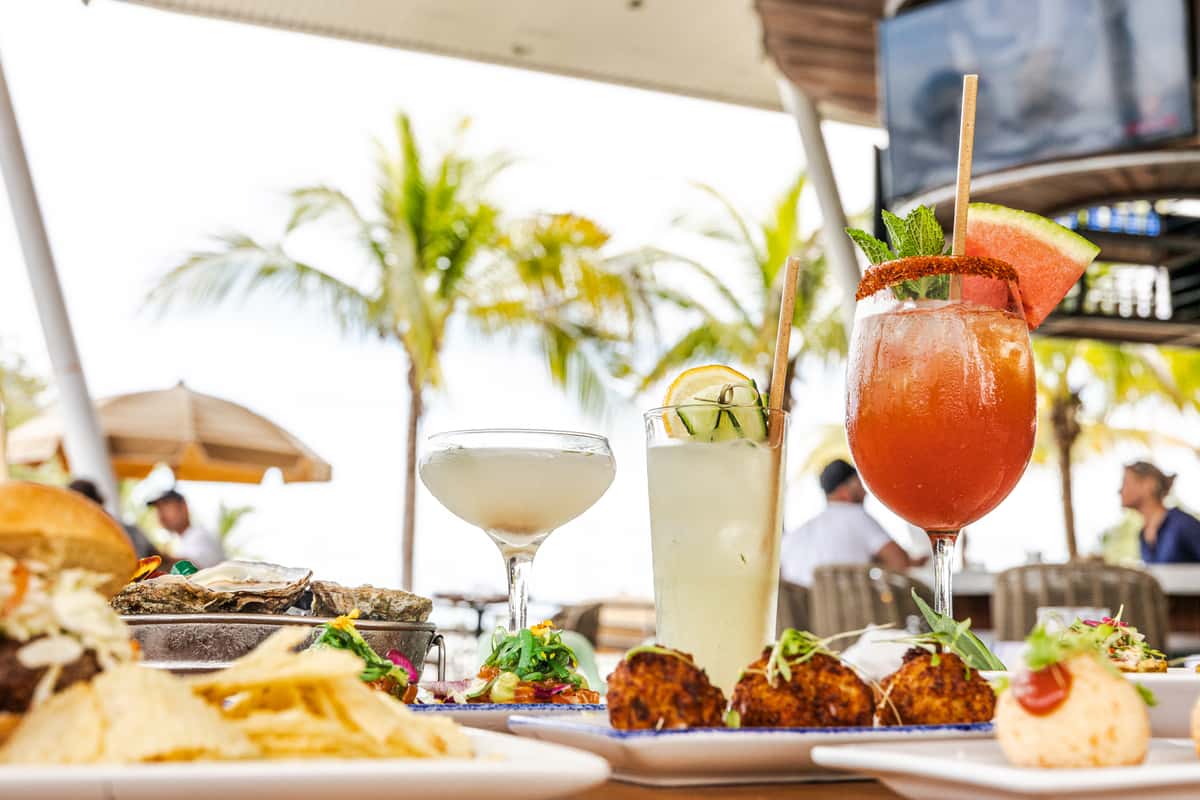
Yes, Bayshore Club Miami's all-day dining and raw bar can enhance waterfront events by giving hosts a built-in culinary program that eliminates the need for outside catering coordination. Bayshore Club occupies an indoor-outdoor space at historic Dinner Key Marina, where panoramic Biscayne Bay views reach every seat."The venue accommodates groups of various sizes, making it adaptable for intimate receptions and larger celebrations alike. The raw bar anchors the seafood-forward menu, offering guests a curated selection that sets a tone most standard banquet halls cannot replicate. With live bands providing entertainment during events, the atmosphere channels the venue's golden-age-of-aviation heritage into something genuinely memorable. For planners who want a waterfront venue where food, setting, and atmosphere work together without heavy production lifts, Bayshore Club delivers that combination in Coconut Grove.
What Are the Key Takeaways About the Types of Miami Waterfront Event Venues?
The key takeaways about the types of Miami waterfront event venues are that each category serves distinct event needs, and matching venue type to event goals determines success. According to Peerspace, corporate event venues in Miami average $209 per hour to rent, with smaller venues averaging $188 per hour and larger venues running about $446 per hour.
The most important considerations when selecting a venue type include:
- Waterfront restaurants provide built-in catering, scenic backdrops, and turnkey event coordination.
- Hotels and resorts bundle accommodations, ballrooms, and on-site logistics for multi-day events.
- Dedicated event spaces offer blank-canvas flexibility for highly customized productions.
- Yacht venues create exclusive, mobile experiences with limited guest counts.
- Parks and open-air spaces suit large-scale public gatherings but require permits and weather contingency plans.
Prioritizing Biscayne Bay views, indoor-outdoor flexibility, and in-house dining simplifies logistics while elevating the guest experience. For planners exploring these options in Coconut Grove, Bayshore Club combines waterfront dining, adaptable event spaces, and a walkable neighborhood location into a single venue worth considering first.