
Where Can You Escape the Noise and Find Open, Easy Spaces in Miami?
Where Can You Escape the Noise and Find Open, Easy Spaces in Miami?
If you're searching for peaceful havens away from Miami's vibrant hustle, you've come to the right place. We understand the constant energy of the Magic City can be overwhelming, and finding those tranquil pockets where you can breathe easy matters for your well-being. Whether you're a local seeking respite or a visitor looking for Miami's calmer side, we'll guide you to the open spaces and serene venues that offer genuine escape.
Escaping the noise to find open and easy spaces in Miami is the pursuit of tranquil environments within the urban landscape that provide mental restoration, stress relief, and a sense of spaciousness through parks, waterfront venues, quiet neighborhoods, and thoughtfully designed establishments.
TL;DR Summary: Miami offers numerous peaceful escapes despite ranking as America's 7th noisiest city. We'll explore why people seek these spaces for proven health benefits like reduced cardiovascular risk. You'll discover tranquil venues ranging from South Pointe Park's waterfront paths to Virginia Key's historic beaches. We'll guide you through serene neighborhoods like Coconut Grove with its Caribbean feel and Key Biscayne's pristine shores. You'll learn to identify restaurants with open-air terraces and waterfront views that create spaciousness. We'll examine how Miami's growing urban canopy and park investments protect quiet spots. Planning tips include visiting during off-season months and understanding peak times. Finally, we'll showcase how Bayshore Club in Coconut Grove exemplifies the perfect peaceful escape with its marina views and open-air design.
Quick Tip: Visit Miami's peaceful venues during weekday mornings or the May-September off-season for the most serene experience with minimal crowds.
As we explore Miami's hidden oases of calm, you'll discover that finding peace in this bustling metropolis isn't just possible—it's essential for your health and happiness. From the tree-lined streets of historic neighborhoods to innovative waterfront dining concepts, Miami's evolution toward more open, accessible spaces reflects a growing understanding of what urban dwellers truly need.
Why Do People Seek Out Peaceful and Spacious Places in Miami?
Miami residents seek peaceful spaces because urban noise creates significant health risks. According to the World Health Organization, noise is the second largest environmental cause of health problems after air pollution. A Harvard T.H. Chan School of Public Health study found that every 4 dB increase in noise exposure correlates with a 4% increased risk of cardiovascular disease. The same institution reports that even 15 minutes in nature can improve mental health for city dwellers. These findings explain why venues like Bayshore Club in Coconut Grove, with its outdoor terrace overlooking the marina, have become essential retreats for health-conscious Miamians.
What Are the Main Benefits of Finding Open and Easy Spaces in a Bustling City?
The main benefits of finding open and easy spaces in a bustling city are reduced cardiovascular risk, improved mental health, and stress relief. The World Health Organization identifies noise as the second largest environmental health threat after air pollution. Harvard T.H. Chan School of Public Health research reveals two critical findings: roughly every 4 dB increase in noise exposure raises cardiovascular disease risk by 4%, and just 15 minutes in nature improves mental health for city dwellers. Open spaces provide acoustic relief through distance from traffic, natural sound barriers, and lower ambient noise levels. These health benefits drive Miami residents to seek waterfront venues, parks, and outdoor terraces where noise levels drop below harmful thresholds.
How Does the Miami Environment Contribute to the Need for Escape?
Miami's environment contributes to the need for escape through persistent high noise levels across multiple neighborhoods. Florida Politics 2024 data ranks Miami as the 7th noisiest major city in the United States with a mean decibel level of 52.31 dB. South Florida Agent Magazine reports concerning neighborhood noise levels:
- Little Havana: 57.4 dB
- North Ponce de Leon: 57.4 dB
- Downtown Miami: 57.1 dB
- Shenandoah: 57+ dB
- Collins Ave (Miami Beach): approximately 60 dBA
Research on redlining and noise shows that environmental justice populations in Miami—low-income communities and people of color—face disproportionately high noise pollution in historically redlined neighborhoods. This unequal noise distribution creates an urgent need for accessible quiet spaces throughout the city, making waterfront escapes like Bayshore Club particularly valuable for residents seeking acoustic relief from urban stressors.
What Types of Places in Miami Offer a Sense of Openness and Tranquility?
The types of places in Miami that offer openness and tranquility include waterfront parks, botanical gardens, marina-side venues, and rooftop terraces. According to the Trust for Public Land 2025 ParkScore, 89% of Miami residents live within a 10-minute walk of a park. The city provides diverse outdoor spaces ranging from urban waterfronts to preserved natural areas, though park access varies significantly by neighborhood demographics.
Are Parks and Outdoor Spaces Effective for Escaping the City Noise?
Yes. Parks and outdoor spaces are effective for escaping city noise by providing natural sound barriers and distance from traffic. The Trust for Public Land 2025 data reveals park-access disparities: Hispanic/Latinx neighborhoods have 50% less park space, Black neighborhoods have 61% more, White neighborhoods have 38% more, and high-income neighborhoods have 29% more compared to the city average.
Miami's premier peaceful parks include:
- Bayshore Club's adjacent Peacock Park (Coconut Grove): tree-lined waterfront with marina views
- South Pointe Park (South Beach): waterfront paths, beach access, pier, dog park (4.8/5 user rating)
- Matheson Hammock Park (Coral Gables): man-made atoll pool with calm waters
- Greynolds Park (North Miami Beach): mangroves and hardwood hammocks
- Bayfront Park (Downtown): waterfront strolls with urban convenience
- Virginia Key Beach Park: historic beach with peaceful atmosphere
- Miami Beach Botanical Garden: lush plantings for quiet strolls
These green spaces combine natural vegetation with water features to reduce perceived noise levels and create tranquil environments within the urban landscape.
How Do Waterfront Locations in Miami Provide Peace and Space?
Waterfront locations in Miami provide peace and space by offering scenic views, natural breezes, and physical separation from dense urban activity. Beaches, piers, marinas, and bayside dining spots create open-air experiences that reduce perceived crowding. The Bayshore Club exemplifies this principle with its marina-front terrace overlooking Biscayne Bay. Water acts as a natural sound buffer while ocean breezes and horizon views create psychological spaciousness that counters Miami's urban intensity.
What Role Do Rooftop and Open-Air Venues Play in Creating Relaxing Experiences?
Rooftop and open-air venues play a crucial role in creating relaxing experiences by providing elevated views, natural ventilation, and reduced street-level noise. These spaces offer outdoor terraces that minimize perceived crowding through vertical separation from ground-level activity. Venues like Bayshore Club utilize open-air concepts with outdoor couches and marina views to maximize airflow and natural light. Designers increasingly incorporate terrace layouts and low-density seating arrangements to enhance the sense of openness in urban hospitality settings, creating peaceful retreats above Miami's bustling streets.
Which Neighborhoods in Miami Are Known for Their Open and Relaxed Vibes?
Miami neighborhoods with open and relaxed vibes include Coral Gables, Coconut Grove, and Key Biscayne. Coral Gables features Mediterranean-style architecture and canopied streets preserved through strict local zoning codes. These regulations maintain the neighborhood's tranquil character and tree-lined boulevards. Coconut Grove offers laid-back Caribbean atmospheres with lush vegetation and waterfront dining options like Bayshore Club.
What Makes Coconut Grove Stand Out as a Laid-Back Escape?
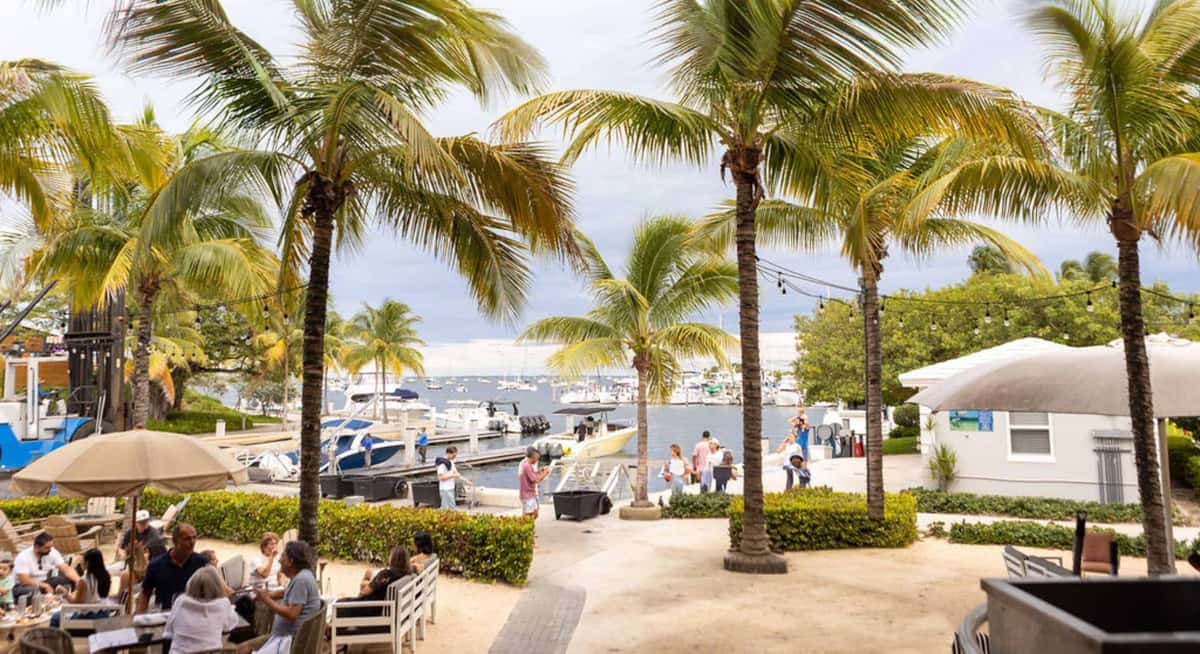
Coconut Grove is Miami's oldest neighborhood with a laid-back Caribbean feel, tree-lined streets, lush vegetation, and miles of coastline. The area hosts numerous parks, bayside dining establishments, and rooftop venues that create a relaxed atmosphere. Bayshore Club exemplifies Coconut Grove's open-air dining culture with its waterfront terrace overlooking the marina. The neighborhood's dense tree canopy and waterfront location provide natural sound barriers against urban noise. Historic preservation efforts maintain the area's bohemian character and village-like scale.
How Does the Atmosphere of Key Biscayne and Miami Beach Compare?
The atmosphere of Key Biscayne and Miami Beach differs significantly in tranquility levels and crowd density. Key Biscayne features pristine beaches, quiet residential streets, and limited commercial development that attracts families and luxury residents seeking peaceful lifestyles. Miami Beach combines busy tourist areas with urban energy alongside parks and waterfront spots. The experience varies by location and timing—South Beach pulses with nightlife while North Beach offers calmer residential zones. Key Biscayne's island setting naturally limits visitor traffic compared to Miami Beach's mainland accessibility.
How Can You Identify Restaurants and Lounges in Miami That Feel Open and Relaxing?
Identifying restaurants and lounges in Miami that feel open and relaxing requires knowing what design features and environmental factors create spacious, tranquil experiences. Outdoor seating, waterfront views, and biophilic design elements are key indicators of venues that offer escape from Miami's urban noise, which averages 52.31 dB citywide according to a 2024 Florida Politics report.
What Features Should You Look For in a Venue to Ensure a Spacious Experience?
The features that ensure a spacious experience are outdoor seating arrangements, waterfront proximity, and low-density table configurations. Venues like Bayshore Club exemplify these qualities with their open-air terraces overlooking Coconut Grove's marina. Rooftop decks, patios, and restaurants adjacent to botanical gardens or green spaces naturally reduce perceived crowding. Look for establishments offering marina views, bay vistas, or beachfront access, as these water-facing locations provide visual expansion and natural sound buffers. The proximity to landscaped areas serves as both a noise barrier and a psychological cue for tranquility.
Why Is Ambiance Important When Choosing Where to Unwind in Miami?
Ambiance is important because natural light exposure and nature-mimicking design directly impact visitor comfort and stress reduction. Biophilic design elements such as living walls, water features, and natural materials create calming environments that counteract urban stressors. Research on urban space design demonstrates that venues incorporating these features report higher customer satisfaction and longer dwell times. Miami establishments utilizing floor-to-ceiling windows, retractable walls, and indoor-outdoor transitions maximize natural light penetration while maintaining climate comfort. The combination of visual openness and natural elements triggers physiological relaxation responses, making ambiance selection crucial for genuine unwinding experiences in Miami's bustling environment.
How Do Local Regulations and Urban Design Affect the Availability of Open, Quiet Spots?
Local regulations and urban design affect the availability of open, quiet spots in Miami by shaping park preservation, development controls, and strategic planning initiatives. The city's green space policies and noise ordinances create pockets of tranquility within the urban landscape. Miami's approach to balancing growth with quality of life determines where residents and visitors can find peaceful escapes.
In What Ways Have Miami's Green Spaces Been Protected or Enhanced?
Miami's green spaces have been protected and enhanced through significant canopy expansion and sustained public investment. According to the Miami-Dade County Urban Tree Canopy Assessment, the city's urban tree canopy grew from 23.2% in 2013 to 34.3% in 2020, exceeding the 30% target. The city invests approximately $133 per capita in its park system, as reported by the Trust for Public Land.
Miami-Dade County's Parks and Open Space Master Plan creates a seamless system of parks, recreation areas, and conservation spaces. The planned 58-acre Miami Freedom Park represents major infrastructure investment that will transform public open-space access. These protected green spaces provide natural sound buffers and create open environments essential for urban respite.
Venues like Bayshore Club in Coconut Grove benefit from these green space protections, offering waterfront dining surrounded by the neighborhood's preserved tree canopy. The following section explores how development patterns influence venue accessibility.
How Does Miami's Development Impact Access to Uncrowded Venues?
Miami's development impacts uncrowded venue access through tourism patterns and regulatory frameworks. Tourism data shows Miami welcomed 28.23 million visitors in 2024, creating seasonal crowding variations. Peak tourist season runs December through April, with February as the busiest month, while the off-season from May to September offers fewer crowds and lower prices.
Miami-Dade County enforces noise ordinances prohibiting "unreasonably loud, excessive, unnecessary or unusual noise." The city explores designated quiet zones, including proposals for trains to pass without sounding horns. These regulations help maintain peaceful pockets within busy districts.
Development patterns create opportunities for establishments like Bayshore Club to provide open-air experiences away from tourist concentrations. Understanding these patterns helps identify the best times and places for peaceful outings, which the next section addresses.
How Can You Make the Most of an Escape to Open and Easy Places in Miami?
Making the most of an escape to open and easy places in Miami requires strategic planning around timing, location selection, and understanding local patterns. Miami's year-round tropical climate enables outdoor experiences throughout all seasons, though crowd levels vary significantly between peak and off-season periods. The city's diverse neighborhoods offer distinct atmospheres ranging from waterfront tranquility to tree-lined residential streets.
What Are Tips for Planning a Relaxing Outing Away from the Crowds?
Tips for planning a relaxing outing away from the crowds include choosing venues during off-peak hours such as weekday mornings or late afternoons. Waterfront locations like Bayshore Club in Coconut Grove provide open-air terraces overlooking marinas that naturally reduce perceived crowding. Selecting neighborhoods known for tranquility, such as Coconut Grove with its Caribbean feel and tree-lined streets, increases your chances of finding peaceful spots.
Look for venues featuring outdoor seating, rooftop decks, or proximity to parks that create spatial openness. Reserve tables in advance at popular waterfront restaurants to secure quieter seating areas away from main traffic flows. Consider exploring lesser-known parks like Greynolds Park in North Miami Beach, which offers mangroves and hardwood hammocks without the crowds of South Beach locations.
When Is the Best Time to Visit Miami's More Open and Peaceful Spots?
The best time to visit Miami's open and peaceful spots is during the off-season from May through September when the city experiences fewer crowds and lower prices. According to 2024 tourism data, Miami recorded 28.23 million visitors with peak periods occurring December through April when February marks the most popular month. Visiting during summer months means encountering significantly reduced tourist density at waterfront venues, parks, and outdoor dining locations. Early morning hours between 7-10 AM offer optimal conditions for experiencing beaches and parks before daily crowds arrive. Weekday visits to popular spots like South Pointe Park or Virginia Key Beach provide more space compared to weekend crowds. September and October represent particularly quiet months when locals reclaim outdoor spaces after summer heat subsides. Planning visits immediately after typical lunch hours (2-4 PM) allows access to restaurants and lounges during their quietest operational periods.
How Does Bayshore Club in Coconut Grove Help You Experience Open and Easy Relaxation in Miami?
Bayshore Club creates open and easy relaxation through its waterfront location and open-air design in Coconut Grove. The restaurant combines outdoor terraces, marina views, and modern aesthetics to provide escape from Miami's 52.31 dB average noise level. Miami New Times named Bayshore Club "Best Waterfront Bar" in 2023, recognizing its success in creating tranquil waterfront dining.
What Features and Experiences Does Bayshore Club Offer for Guests Seeking an Escape?
Bayshore Club offers waterfront dining with an open-air restaurant concept overlooking Coconut Grove's marina. The outdoor terrace features couches positioned for panoramic marina views, creating spacious seating areas away from urban crowding. The venue's design merges natural waterfront elements with modern aesthetics, making it an ideal setting for private events and group gatherings.
The restaurant's location in Coconut Grove provides access to the neighborhood's Caribbean feel and tree-lined streets. Bayshore Club's outdoor seating capitalizes on waterfront breezes and natural light, elements that design research links to calmer ambiance. The open-air concept reduces perceived crowding through low-density seating arrangements and elevated views over the marina.
Customer reviews consistently praise Bayshore Club for ambiance, service, and its seasonal menu offerings. The 2023 "Best Waterfront Bar" designation from Miami New Times validates the venue's ability to deliver peaceful waterfront experiences. Visit Bayshore Club during Miami's off-season (May-September) for fewer crowds and enhanced tranquility.
What Are the Key Takeaways About Escaping the Noise and Finding Open, Easy Places in Miami?
The key takeaways about finding open, easy places in Miami are that waterfront venues like Bayshore Club provide essential escape from the city's 52.31 dB noise levels. Miami residents need peaceful spaces, with Harvard research showing 15 minutes in nature improves mental health for city dwellers. Coconut Grove neighborhoods offer laid-back atmospheres with tree-lined streets and bayside dining options.
Open-air restaurants reduce perceived crowding through outdoor terraces and marina views. Timing matters—Miami's 28.23 million annual visitors concentrate in December-April, making off-season visits quieter. Bayshore Club exemplifies these principles through its waterfront location, open-air design, and recognition as Miami's best waterfront bar, offering accessible relaxation in Coconut Grove's tranquil setting.