
Why Waterfront Dining Feels Different After a Long Week
Why Waterfront Dining Feels Different After a Long Week
If you've found yourself gravitating toward waterfront restaurants after a demanding workweek, you're experiencing a pull that goes beyond simple hunger. We understand that after days of meetings, deadlines, and urban stress, you're seeking more than just a meal—you're looking for a reset button for your mind and body. You're in the right place to discover why that irresistible draw to dine by the water isn't just about the view.
Waterfront dining is a multisensory experience that triggers measurable physiological and psychological changes in our bodies. Research shows that spending just 20-30 minutes near water produces the largest drop in cortisol levels, while the sight and sound of water activate our parasympathetic nervous system, promoting deep relaxation. This phenomenon, known as the "blue mind" effect, creates a state of calm peacefulness that transforms an ordinary dinner into a restorative ritual.
TL;DR Summary
- Psychological restoration through blue spaces: Studies confirm that waterfront environments reduce cortisol by up to 30%, lower blood pressure, and trigger our body's relaxation response more effectively than urban parks or green spaces.
- Multisensory dining enhancement: The combination of water sounds, sea breezes, and panoramic views creates a unique sensory context that makes food taste better and increases dining satisfaction through positive emotional mediation.
- Social connection catalyst: Waterfront venues function as community hubs where the restorative environment promotes prosocial behavior, with Friday drawing 72% of happy-hour seekers looking to unwind and connect.
- Bayshore Club's unique appeal: This 300-seat Coconut Grove landmark combines a seafood-forward menu with panoramic Biscayne Bay views, live music, and a weekday happy hour that helps stressed professionals unwind.
- Strategic unwinding approach: Timing your visit for early evening (4-6 PM) maximizes both happy hour benefits and optimal viewing conditions, while features like marina seating and fire pits extend the restorative experience beyond just dining.
Quick Tip: Arrive 20 minutes before sunset to maximize the stress-reducing benefits of water exposure before your meal even begins—this brief "blue space" preview primes your nervous system for deeper relaxation throughout your dining experience.
As we explore the science behind waterfront dining's transformative power, you'll discover why venues like Bayshore Club in Coconut Grove have become essential destinations for professionals seeking to decompress and reconnect after demanding weeks. The following sections will reveal how water views influence our stress hormones, why food tastes better by the bay, and how to optimize your waterfront dining experience for maximum restoration.
What Are the Psychological Effects of Dining by the Water After a Busy Week?
The psychological effects of dining by the water after a busy week include measurable stress reduction, enhanced mood, and restoration of mental energy through exposure to blue spaces. According to WHO data, approximately 25% of urban populations experience psychological distress, and waterfront environments provide relief through reduced heat exposure, increased nature connectedness, and decreased anxiety. These effects manifest when dining at waterfront venues like Bayshore Club in Coconut Grove, where the combination of water views and dining creates a restorative experience after demanding workdays.
How Does the Waterfront Atmosphere Influence Stress Relief and Relaxation?
The waterfront atmosphere influences stress relief through multiple biological and psychological mechanisms. Attention Restoration Theory, Psycho-physiological Stress Recovery Theory, and the Biophilia Hypothesis explain how water environments reduce mental fatigue and trigger positive emotional responses. A 2020 meta-analysis including 52 Japanese studies found consistent reductions in salivary cortisol after natural environment exposure. Brief waterfront exposure of 20-30 minutes produces the largest cortisol drops. Restoration experiences prove stronger in coastal settings than urban parks or built environments.
People living near coasts show better health indicators than inland residents. Clinical programs like Blue Prescribing use structured blue-space visits as therapeutic interventions for chronic conditions and poor mental health. These waterfront benefits explain why venues such as Bayshore Club attract professionals seeking post-work restoration through their marina-level seating and Biscayne Bay views.
Why Does the Sound and Sight of Water Enhance the Dining Experience?
The sound and sight of water enhance dining by activating the parasympathetic nervous system and reducing stress markers. Natural water sounds trigger relaxation responses rather than alertness. Controlled studies document emotion changes from water sounds: negative emotions decrease 21.6-67.3% and heart-rate variability improves (LF/HF decreases 2.3-30.5%) at sound levels under 40-50 dB.
Visual water exposure lowers heart rate and blood pressure compared to non-aquatic environments. Wider water bodies produce stronger effects. The "blue-mind" concept describes reduced catecholamine stress responses near water, creating calm and life satisfaction. These physiological changes enhance taste perception and dining satisfaction when combined with waterfront restaurant atmospheres.
This section demonstrates how waterfront dining addresses urban stress through proven psychological and physiological mechanisms, setting the foundation for understanding the unique sensory experiences that distinguish waterside restaurants from conventional dining venues.
How Does the Sensory Experience of Waterfront Dining Set It Apart?
The sensory experience of waterfront dining sets it apart through unique combinations of visual, auditory, and olfactory stimuli that create a distinctive multisensory dining context. Waterfront restaurants like Bayshore Club in Coconut Grove provide expansive water views, natural sounds, and sea air that together activate restorative psychological and physiological responses absent in traditional indoor dining.
What Unique Sights, Sounds, and Smells Do Waterfront Locations Offer?
Waterfront locations offer combined sensory cues including gentle sea breezes, wave sounds, marina activity, salt air, sunset light, and open water vistas. These elements create what experts call "soft fascination"—low-demand sensory experiences like watching ripples that pull attention away from daily stressors. At Bayshore Club, panoramic Biscayne Bay views across 300 seats provide this visual fascination, while marina-level seating amplifies the sensory variety through proximity to boat activity and water sounds.
Real waterfront venues enhance sensory experiences through strategic features. Fire pits add warmth and visual focal points, live music (Thursday through Saturday at Bayshore Club) layers acoustic richness, and cabana-covered areas create intimate sensory zones. The combination of these elements facilitates mental switching-off and reflective states that distinguish waterfront dining from conventional restaurant experiences.
In What Ways Does Waterfront Ambiance Affect Taste and Mood?
Waterfront ambiance affects taste and mood through documented multisensory integration effects. Field experiments in restaurant settings demonstrate that nature ambience combining visual and auditory stimuli evokes positive emotions, reduces stress, and increases healthy menu choices such as vegetarian selections. Laboratory studies confirm food served in aesthetically pleasing environments rates higher for smell, taste, and appearance, with emotion mediating the relationship between aesthetics and perceived food quality.
The sights, sounds, smells, and tactile sensations of waterfront environments meaningfully influence gustatory perception and dining satisfaction. Auditory cues like gentle water sounds have been linked to increased selection of healthier menu items, while the visual appeal of water views enhances flavor perception. At venues like Bayshore Club, where a seafood-forward menu features items such as Lime & Pepper Rare Crusted Tuna and Smoked Wahoo Fish Dip, the waterfront setting amplifies these culinary experiences through environmental enhancement of taste perception.
The upcoming section explores why people specifically seek waterfront restaurants for social connection and unwinding at week's end.
Why Do People Crave Escape and Connection at Waterfront Restaurants at Week's End?
People crave escape and connection at waterfront restaurants at week's end because these venues combine stress-reducing blue spaces with social gathering opportunities. According to a population-level study on urban blue spaces, well-designed waterfront access fosters community interaction while reducing stress, anxiety, and depression. Waterfront restaurants serve as social hubs where Friday's 72% happy-hour consumer share seeks both relaxation and connection after work.
How Does Waterfront Dining Encourage Social Connection and Unwinding?
Waterfront dining encourages social connection and unwinding through natural environments that promote prosocial behavior and stress reduction. Brief outdoor nature exposure of 15–30 minutes makes people kinder and more cooperative. Blue spaces foster social cohesion by creating community interaction points that reduce population-level anxiety and depression.
Friday draws a large share of happy-hour consumers to waterfront venues during the early evening 4–6 PM window. Waterfront restaurants function as diverse social hubs by combining food, entertainment, and restorative public space. These venues attract mixed groups seeking both escape and community connection.
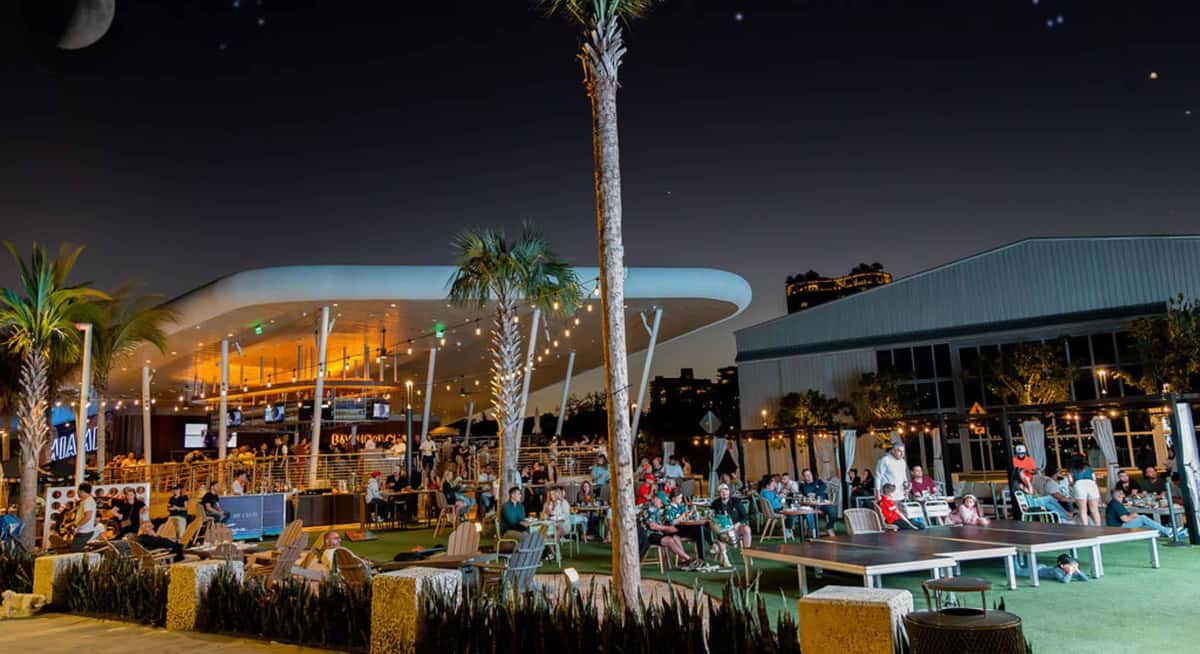
The combination of natural water views and social atmosphere creates optimal conditions for unwinding. Bayshore Club exemplifies this model with its multi-level waterfront setting that seats 300 guests across panoramic Biscayne Bay views.
What Drives the Demand for Relaxation Spaces Like Bayshore Club in Coconut Grove?
The demand for relaxation spaces like Bayshore Club stems from Miami's rising "clubstaurant" trend, with searches increasing 254% year-over-year. Consumers seek combined food, entertainment, and atmosphere experiences at waterfront locations. Florida's waterfront restaurants command commercial premiums due to scarcity and desirable demographics with high revenue potential.
Coconut Grove's identity as Miami's oldest neighborhood drives steady local demand for waterfront leisure venues. The area's scenic shoreline, parks, and boutique dining create ideal conditions for escape and connection. Peak dining patterns concentrate between 6:00–8:30 PM, with earlier dining preferences supporting after-work patronage.
Bayshore Club captures this demand through strategic positioning at Dinner Key's historic waterfront. The venue offers half-priced happy hour cocktails weekdays from 4pm–6pm and live music Thursday through Sunday. These programs align with concentrated end-of-week leisure patterns while providing the escape and social connection that drives waterfront dining demand.
What Makes Waterfront Dining at Bayshore Club Unique for Coconut Grove Locals?
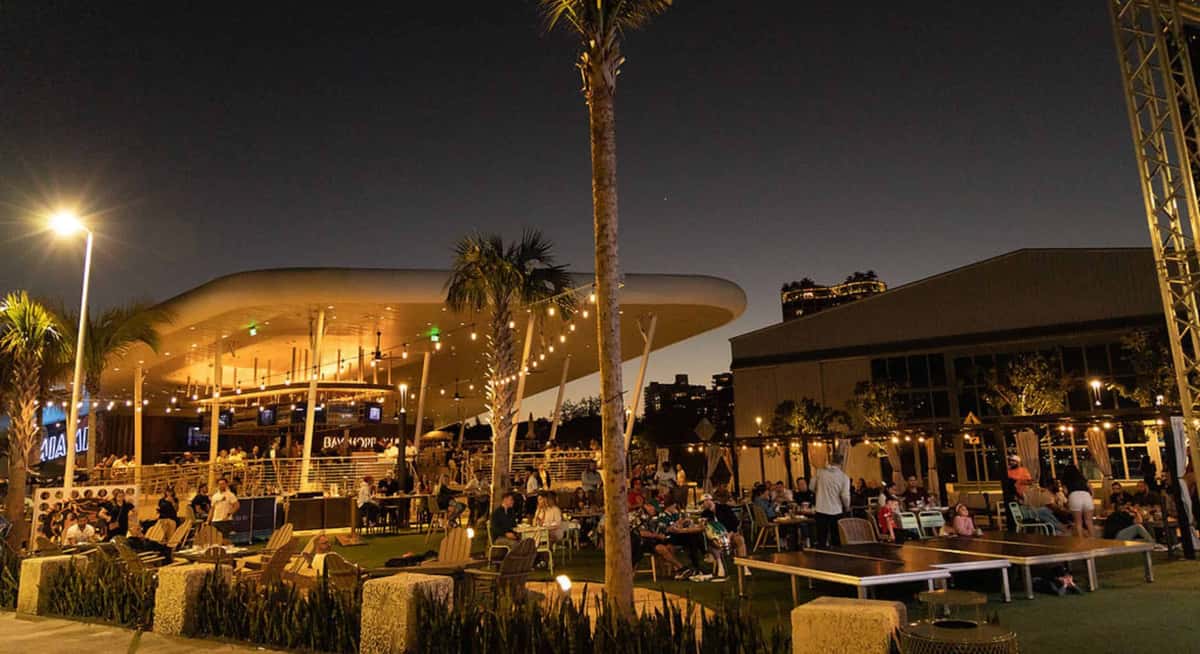
Waterfront dining at Bayshore Club offers Coconut Grove locals a distinctive end-of-week experience through its combination of panoramic Biscayne Bay views, seafood-forward cuisine, and multi-level waterfront design spanning 300 seats. The venue transforms the traditional restaurant concept into a restorative waterfront retreat that locals consistently choose for decompression after demanding workweeks.
Why Do Locals Choose Bayshore Club for Their End-of-Week Retreat?
Locals choose Bayshore Club for their end-of-week retreat because it delivers expansive Locals choose Bayshore Club for their end-of-week retreat because it delivers expansive Biscayne Bay vistas across multiple dining levels alongside a seafood-forward menu inspired by coastal flavors. Signature dishes include Lime & Pepper Rare Crusted Tuna, Blackened Mahi Sammy, and the popular Smoked Wahoo Fish Dip at $13. The Island Conch Fritters ($16) and Mussel Frites ($22) draw repeat customers seeking coastal flavors.
Happy hour runs weekdays 4pm–6pm with half-priced cocktails, beer, wine, and select appetizers. Live music fills Thursday through Saturday evenings while DJ brunch energizes Sunday afternoons. Customer reviews highlight attentive staff and "casual and comfortable" local appeal, with 92% of reviewers recommending the venue in a 57-review Facebook snapshot. The restaurant earned an OpenTable Diners' Choice award, confirming its status as a trusted local destination.
What Aspects of Bayshore Club's Location Enhance the Weekend Experience?
Bayshore Club's location at 3391 Pan American Drive in Dinner Key enhances the weekend experience through direct dockside access and historic waterfront significance. The site served as a 1918 continental naval air station and later hosted Pan American flying-boat operations after the original island connected to the mainland in 1914. Boat docking operates Thursday through Sunday, allowing maritime arrivals.
Marina-level seating features fire pits and cabanas positioned for sunset views across Biscayne Bay toward the Miami skyline. The multi-level layout creates varied atmospheres from intimate cabana gatherings to social circular bar scenes. Weekday afternoons and early evenings before 6pm offer shaded, breezier seating that locals prefer during Coconut Grove's warmer months.
The waterfront position at Dinner Key provides both escape and accessibility, allowing locals to shift from workweek stress to weekend restoration while remaining connected to their Coconut Grove community.
How Should You Approach Enjoying Waterfront Dining in Coconut Grove at Bayshore Club?
Waterfront dining in Coconut Grove offers a unique escape from weekly stress through the restorative power of blue spaces. Bayshore Club maximizes this experience with strategic amenities and programming designed for relaxation. The following insights reveal how to optimize your visit and understand why waterfront dining delivers distinct psychological benefits.
How Can Bayshore Club Help You Unwind After a Long Week?
Bayshore Club helps you unwind after a long week through strategic happy hour pricing, diverse relaxation spaces, and social programming. The venue's weekday happy hour runs Monday through Thursday from 4pm to 6pm, featuring half-priced cocktails, beer, wine, and select appetizers. This timing aligns with peak after-work dining patterns when a majority of happy-hour consumers seek early weekday evening venues.
The restaurant's multi-level design creates varied atmospheres for different unwinding preferences. Marina-level seating provides direct water proximity with fire pits for cooler evenings. The large circular bar anchors the social space with live jazz on select nights. Cabana-covered turf areas offer group-friendly zones. Boat owners access the venue directly via dock facilities available Thursday through Sunday.
Live music performances run Thursday through Sunday, creating an acoustic backdrop that supports relaxation and social connection. The 300-seat capacity across multiple levels prevents overcrowding while maintaining energy. OpenTable reservations and VIP program options eliminate arrival stress for larger groups.
These combined elements support the stress-reduction mechanisms identified in blue space research, where 20-30 minutes of waterfront exposure produces measurable cortisol drops.
What Are the Key Takeaways About Why Waterfront Dining Feels Different After a Long Week?
The key takeaways about why waterfront dining feels different after a long week center on measurable physiological and psychological mechanisms. Blue spaces trigger specific biological responses: reduced cortisol levels, lowered heart rate, decreased blood pressure, and increased subjective well-being scores. These effects operate through three pathways: mitigation of urban stressors, instoration through nature connectedness, and restoration of cognitive capacity.
Waterfront dining engages multiple sensory systems simultaneously. Visual water exposure, natural water sounds under 50 dB, sea air, and changing light patterns create a multisensory context. This environmental richness reduces cognitive load by providing "soft fascination"—gentle, non-demanding stimuli such as watching ripples or boats. Research shows this sensory combination can improve perceived food taste by 21-67% while reducing negative emotions.
Social dynamics amplify waterfront dining's restorative effects. Waterfront venues function as community hubs that promote prosocial behavior. Studies document increased kindness and cooperation after just 15-30 minutes of nature exposure. Happy hour programming and live entertainment create structured opportunities for connection during peak 6-8:30pm dining windows.
The biophilic response to water environments influences dining choices and satisfaction. Field experiments show nature ambience increases selection of healthier menu items and reduces plate waste. These combined mechanisms make waterfront restaurants like Bayshore Club distinct decompression spaces that address multiple dimensions of work-week stress through environmental, sensory, social, and biological pathways.